
Are you packing your bags for an exciting family trip this summer? However, many homeowners worry about covering your sink before vacation to prevent sewer odors. Specifically, viral travel hacks suggest balancing upside-down glasses over drain holes before leaving home. Fortunately, understanding real plumbing principles helps you protect your home effectively without silly kitchen tricks.
I remember returning from a three-week trip a few years ago. Specifically, a foul, musty smell greeted us right at the front door. At first, I assumed something spoiled inside the kitchen refrigerator. However, our unused guest bathroom sink drain had completely dried out. Therefore, I researched professional plumbing methods to keep home drains fresh.
The Truth About Covering Your Sink Before Vacation and Viral Hacks
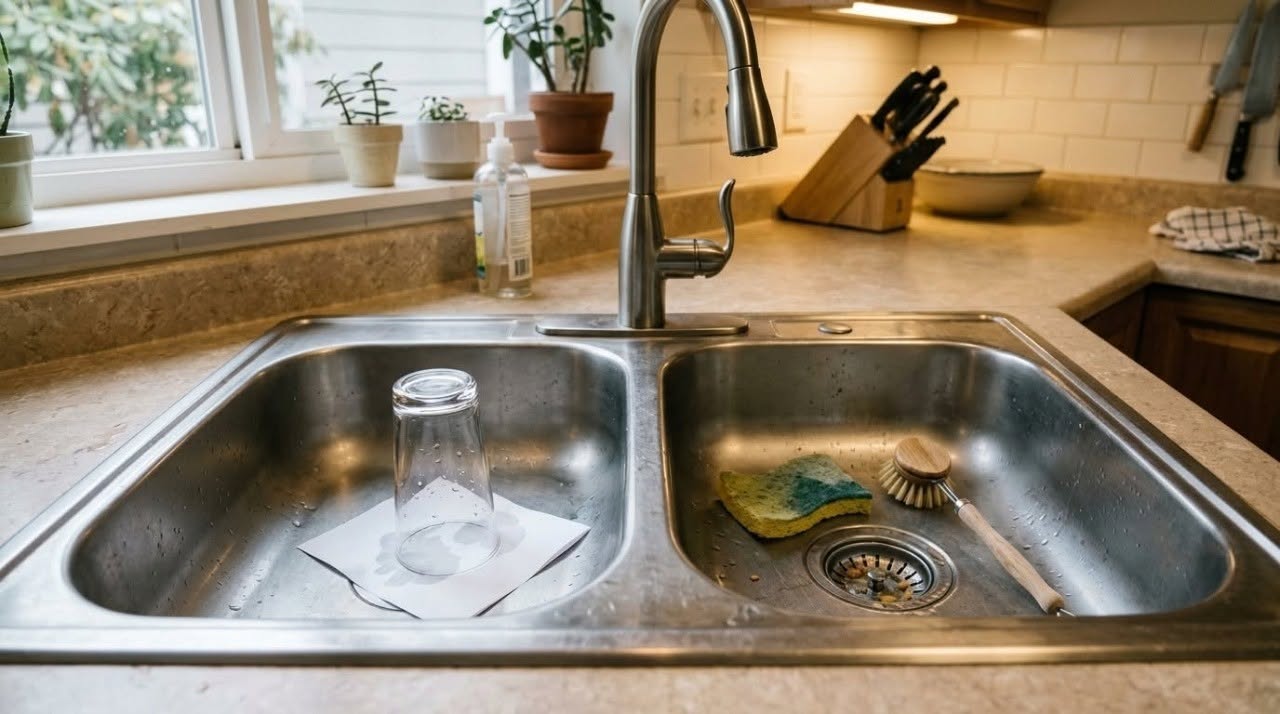
First, let us examine the viral social media trick circulating online. Users place a sheet of paper towel over the sink drain opening. Then, they place a heavy drinking glass upside down over the paper. In theory, this setup blocks sewer gases and crawling bugs from entering.
However, this DIY method fails to deliver a reliable seal in practice. Paper towels quickly absorb ambient humidity and turn soggy on bathroom counters. Consequently, the limp paper loses its structural shape and allows air to leak. Furthermore, any slight bump can dislodge the glass easily.
Therefore, resting glassware in empty sinks provides little real protection against odors. Instead, you need airtight physical barriers that stay in place securely. In addition, real plumbing solutions address the root cause below the basin.
Understanding the Plumbing Mechanics of the P-Trap
Every sink, shower, and floor drain features a curved pipe called a P-trap. Specifically, this U-shaped pipe sits directly beneath your fixture inside the cabinet. Many people assume the curve simply catches dropped rings or loose hair. However, the true purpose is holding standing water constantly.
This standing water creates a physical seal between your home and municipal sewer lines. Consequently, toxic sewer gases like methane cannot push past this water barrier. In addition, the water seal stops subterranean insects from crawling up into living spaces. Thus, your home air remains clean, safe, and pleasant every day.
Why Drain Water Evaporates During Long Trips
However, unused plumbing fixtures lose their protective water seals over time. Dry indoor air and central air conditioning speed up water evaporation rapidly. Specifically, summer cooling systems pull moisture out of household air constantly. Therefore, shallow water seals can dry out in two to three weeks.
When the trap dries completely, sewer smells travel directly into your home. In addition, drain flies and sewer roaches exploit dry pipes to enter bathrooms. This issue happens most often in rarely used guest baths and basement drains. Consequently, preparing your plumbing before traveling remains a smart preventative habit.
The Professional Plumber Mineral Oil Trick
Fortunately, professional plumbers use a simple trick to stop trap evaporation completely. First, run tap water through the sink for fifteen seconds to fill the trap. Next, pour one tablespoon of plain mineral oil directly down the drain opening.
Specifically, mineral oil is lighter than water and floats directly on top. This thin oil layer creates a protective shield that blocks evaporation entirely. As a result, the water seal beneath stays intact for months at a time.
However, you must use standard mineral oil rather than vegetable cooking oils. Cooking oils go rancid quickly and create sticky clogs inside your drainage pipes. In contrast, mineral oil remains odorless, stable, and safe for all home pipes.
Modern and Effective Ways to Seal Drains
In addition to mineral oil, physical stoppers provide excellent secondary protection. For example, flat silicone suction covers create an airtight seal over drain grates. These flexible rubber discs lay completely flat against sink basins without moving.
Furthermore, standard push-down mechanical sink stoppers work very well when closed tightly. You can also place basic rubber suction plugs into kitchen sink openings. Consequently, any lingering drain odors remain trapped beneath the sealed basin floor.
For Complete Cooking STEPS Please Head On Over To Next Page Or Open button (>) and don’t forget to SHARE with your Facebook friends
In fact, keeping silicone covers on guest sinks is a great everyday habit. These inexpensive kitchen tools wipe clean easily and store flat inside drawers. Therefore, pack away the glassware and use proper household stoppers instead.
Don’t Forget Floor Drains and Laundry Standpipes
Many homeowners remember bathroom sinks but forget hidden utility drains entirely. For instance, basement floor drains and laundry room standpipes lose water quickly. These low-lying drains connect directly to main sewer lines under your home foundation.
Therefore, carry a water pitcher into your utility room before every long trip. Pour four cups of clean water into every basement floor drain grate. In addition, add a splash of water into the washing machine wall pipe.
Then, add a spoonful of mineral oil to seal each utility trap. Consequently, your basement stays completely free of foul odors while you travel. Taking two minutes to check basement drains prevents unpleasant homecoming surprises.
Pre-Vacation Garbage Disposal Cleaning Routine
Kitchen sinks require extra attention because food waste clings to disposal blades. Trapped food scraps rot quickly inside warm, closed kitchens during summer trips. Therefore, clean your disposal thoroughly on the morning you depart.
First, pour half a cup of baking soda into the disposal chamber. Next, toss in a dozen ice cubes and fresh lemon peel slices. Run cold water and turn on the disposal for thirty seconds continuously.
Specifically, the hard ice knocks old food debris off grinding impellers. Meanwhile, baking soda neutralizes acidic odors and lemon peels leave a fresh scent. Finally, place a silicone stopper over the clean kitchen drain opening securely.
The Main Water Shutoff Valve: Ultimate Peace of Mind
Besides managing drain odors, consider shutting off your main water supply valve. A burst washing machine hose or toilet supply line can flood floors rapidly. Therefore, turning off the main valve prevents major water damage while away.
Locate your main shutoff valve in the basement or near the water meter. Turn the brass lever a quarter turn until it sits perpendicular to the pipe. Next, open a bathroom faucet briefly to relieve remaining water line pressure.
Consequently, your pipes remain safe from sudden pressure spikes and leaks. However, leave your water heater on its lowest vacation temperature setting. This easy step saves household energy while keeping internal components safe.
Quick Pre-Travel Plumbing Checklist
Follow this quick checklist on departure morning for complete home plumbing security:
Run water in all sinks, showers, and bathtubs for twenty seconds.
Flush every toilet once to ensure clean water fills the bowl.
Pour water and a spoonful of mineral oil into basement floor drains.
Clean the kitchen garbage disposal with ice and citrus peels.
Place flat silicone covers over all bathroom and kitchen drains.
Shut off the main household water supply valve in the utility room.
Frequently Asked Questions About Vacation Plumbing
How long does it take for a bathroom P-trap to dry out? In most homes, water seals last roughly three to four weeks undisturbed. However, hot climates and running air conditioners can dry traps in two weeks. Using mineral oil extends trap life to several months easily.
Can insects really climb up through dry sink drains? Yes, sewer roaches and drain flies seek out dry plumbing pipes actively. Without a standing water barrier, insects crawl past the P-trap into sinks. Sealing drains tightly keeps pests locked outside where they belong.
Should you leave toilet lids open or closed when traveling? Always close all toilet lids firmly before leaving for vacation. Closed lids prevent pet accidents and stop airborne dust from settling inside bowls. In addition, closed lids keep water from evaporating quickly in hot weather.
Conclusion: The Smart Way of Covering Your Sink Before Vacation
In conclusion, covering your sink before vacation protects your home from sewer smells and pests. Skip the unreliable viral paper and glass hack in favor of proven methods. By filling P-traps, adding mineral oil, and using silicone stoppers, drains stay protected.