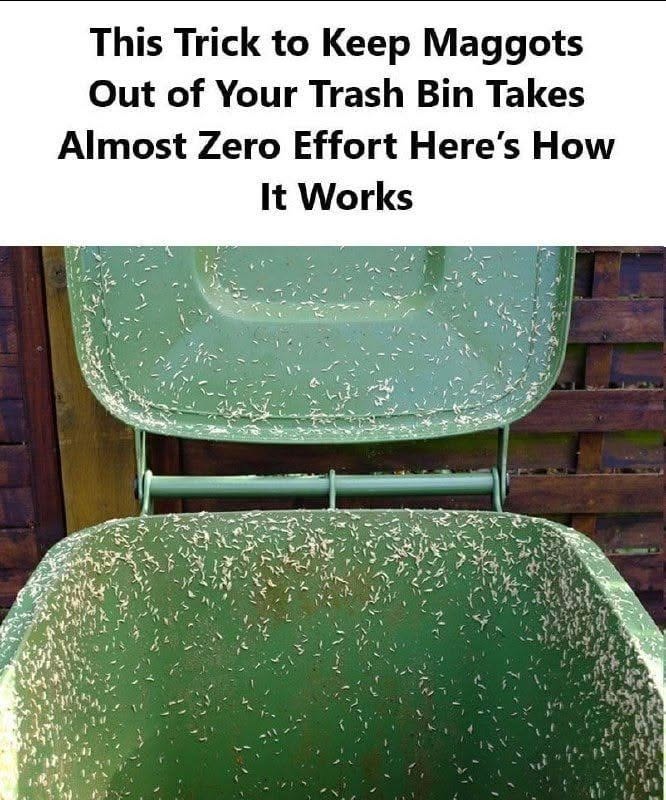
Opening a trash bin and discovering dozens of small white larvae crawling around the lid, sides, or bottom can be an unpleasant surprise. The problem is especially common during warm weather, when food waste decomposes quickly and flies are highly active.
Although maggots can seem to appear almost overnight, they do not appear spontaneously. They are the immature larval stage of certain flies. An adult fly finds suitable organic material, lays eggs, and under favorable conditions those eggs can hatch surprisingly quickly.
The good news is that a trash-bin infestation is usually manageable. Removing contaminated waste, cleaning away organic residue, allowing the container to dry, and preventing flies from reaching future food waste can make a major difference.
The most effective strategy is not simply killing the larvae you can see. It is understanding why flies selected the bin in the first place and removing the conditions that allowed them to reproduce.
What Exactly Are Maggots?
Maggots are fly larvae. They represent one stage in the normal fly life cycle rather than a separate type of insect.
The general cycle is:
Adult fly
Egg
Larva, commonly called a maggot
Pupa
Adult fly
Different fly species prefer different materials, but household garbage containing decomposing food can provide an attractive place for several common flies to lay eggs.
Meat, fish, cooked leftovers, spoiled food, pet waste, and other moist organic materials can be especially attractive.
Why Maggots Seem to Appear Overnight
The speed is one reason people find infestations so confusing.
You may look inside the bin one day and notice nothing unusual. Shortly afterward, numerous larvae may be visible.
The eggs are small and can easily go unnoticed. Warm conditions can accelerate fly development, and the larvae become much easier to see after hatching.
What appears to be a sudden invasion may therefore have started earlier when a fly gained access to exposed waste and deposited eggs.
Why Trash Bins Are So Attractive to Flies
A garbage container can accidentally provide several things flies need in one place: food, moisture, warmth, organic material, and a relatively protected environment.
When the lid is repeatedly opened or does not close properly, flies may also have easy access to the contents.
The Biggest Attraction: Food Waste
Not all household trash is equally attractive to flies.
Dry cardboard, empty packaging, and clean paper are generally much less appealing than moist decomposing food.
Common problem items include raw meat trimmings, cooked meat leftovers, fish and seafood scraps, animal bones with food attached, food-soiled packaging, spoiled leftovers, fruit waste, some vegetable scraps, pet food, and pet waste.
Animal-based food scraps can become particularly strong-smelling as they decompose in warm conditions.
Moisture Makes the Situation Worse
Leaking garbage bags, discarded liquids, food juices, rainwater, condensation, and wet food scraps can create a damp layer at the bottom of the bin.
This moisture combines with decomposing organic material and can produce exactly the environment flies seek.
A clean, relatively dry container is much less inviting than one containing a warm mixture of food residue and liquid.
Heat Can Accelerate the Problem
Trash bins left in strong summer sun can become very warm.
Heat accelerates food decomposition, increases odors, and can support rapid insect activity.
Whenever practical, keeping an outdoor garbage container in a cooler shaded location can help slow decomposition.
The bin still needs to remain accessible for collection and positioned according to local waste rules.
Bad Odors Are More Than an Annoyance
A strong garbage smell is often evidence that organic material is decomposing.
Odors can also attract flies searching for suitable places to feed and reproduce.
Trying to cover the odor with perfume does not remove the underlying attraction.
Cleaning food residue, controlling moisture, and securely containing waste are more important than simply making the bin smell better.
Step One: Remove the Source
If you already have an infestation, begin by dealing with the garbage itself.
Wear suitable household cleaning gloves and avoid direct contact with decomposing waste.
Seal contaminated garbage appropriately and dispose of it according to your local waste-collection rules.
If collection day is approaching, moving the waste out of the bin during scheduled collection is often the simplest way to eliminate the larvae’s primary food source.
Do not leave loose infested garbage elsewhere around the property, where flies may simply continue breeding.
Check for Torn or Leaking Bags
Once the bin is emptied, inspect the bottom.
A surprisingly common cause of recurring odors is a small amount of food liquid that leaked through a garbage bag and remained underneath it.
Look for meat juices, food residue, sticky liquid, grease, pieces of food, damaged bags, and residue around the rim.
Removing visible maggots without removing these materials may provide only temporary relief.
Getting rid of the larvae you can see is only half the job—the hidden food residue at the bottom, rim, and lid can determine whether flies return
rinse as directed.
Never Mix Bleach and Ammonia
Bleach should also never be mixed with ammonia or ammonia-containing cleaners because hazardous gases can be produced.
More cleaning chemicals do not automatically mean better cleaning.
Simple cleaning performed correctly is generally safer than an improvised chemical mixture.
Cleaning and Disinfecting Are Different
Cleaning physically removes dirt, food residue, grease, and organic material.
Disinfecting uses an appropriate product to reduce certain microorganisms on a suitable surface.
A dirty bin should generally be cleaned before any disinfecting step because heavy organic residue can interfere with some disinfectants.
If you decide disinfection is necessary, use a product suitable for the surface and follow its label for dilution, contact time, ventilation, rinsing, and safety precautions.
Do You Need Insecticide?
For a small infestation confined to a garbage bin, insecticide is often unnecessary.
Removing the food source, disposing of the larvae, cleaning the container, and preventing new fly access can interrupt the cycle.
If pesticides are considered, use only products labeled for the intended location and pest, and follow the instructions carefully.
Never casually spray pesticides around exposed food, kitchen surfaces, children, pets, or areas not permitted by the product label.
The Most Effective Long-Term Solution: Block Access to Food
Once the bin is clean, prevention becomes the priority.
Flies cannot lay eggs on food waste they cannot reach.
That makes careful waste containment one of the most effective ways to prevent another infestation.
1. Seal Garbage Bags Properly
Do not leave bags open inside the bin.
Tie or otherwise securely close garbage bags before placing them into the outdoor container.
This is particularly important when the bag contains meat, fish, pet food, or other highly perishable material.
2. Avoid Overfilling Bags
An overfilled garbage bag is more likely to tear.
Sharp packaging, bones, cans, and other objects can puncture thin plastic and allow food residue to leak into the bottom of the container.
Using a suitably strong bag and avoiding excessive weight can reduce leaks.
3. Wrap High-Risk Food Waste
Some households find it useful to wrap especially messy food scraps before placing them into the main garbage bag.
Depending on local waste rules, appropriate materials may include used paper, paper bags, suitable food packaging, or approved compostable liners where appropriate.
The purpose is not to create unnecessary packaging. It is to reduce leakage and make the waste less accessible to flies.
4. Be Especially Careful With Meat and Fish
Meat and seafood scraps can produce strong odors quickly in hot weather.
If collection is several days away, some households choose to keep well-sealed meat or fish scraps frozen until close to collection time, provided this is hygienic and practical for their home.
Clearly contain the waste so that it cannot contaminate food or freezer surfaces.
5. Keep the Lid Closed
A closed lid creates an important physical barrier between flies and garbage.
Check that the lid closes completely after every use.
A warped, damaged, or poorly fitted lid can allow flies easy access.
6. Do Not Overfill the Bin
When garbage rises above the rim, the lid may remain partially open.
Even a small opening can make it easier for flies to reach food waste.
Keeping the container within its intended capacity helps the lid close properly.
7. Clean the Rim and Lid
People often clean the bottom of a bin but ignore the lid.
Food can touch the lid when a bag is overfilled, while spills can collect around handles and hinges.
These areas should be cleaned whenever visible residue develops.
8. Control Liquid at the Bottom
Inspect the bin after collection.
If liquid is present, determine where it came from.
Possible causes include leaking food bags, rain entering through an open lid, condensation, discarded beverages, and wet household waste.
Fixing the cause is better than repeatedly trying to absorb a large amount of liquid.
9. Use Absorbent Material Carefully
A small amount of newspaper, cardboard, or another appropriate absorbent material can sometimes help catch minor leaks at the bottom of a bin.
Replace it when wet or dirty.
Do not allow saturated paper to sit at the bottom for weeks because wet, food-soiled material can become part of the problem.
10. Keep the Bin in the Shade When Possible
A shaded location can help reduce heating and slow the decomposition of food waste.
Make sure the location remains practical, secure, and compliant with local collection requirements.
One of the best summer tricks has nothing to do with sprays or chemicals—it is changing how the smelliest food waste is stored during the days before
11. Time High-Risk Waste Closer to Collection Day
One of the simplest ways to reduce fly activity is to minimize the amount of time highly perishable waste remains in a warm outdoor bin.
If local collection occurs once or twice per week, try to dispose of especially odorous food waste as close to collection day as practical.
This can be particularly useful for meat scraps, fish, seafood shells, spoiled pet food, and other materials that decompose rapidly.
The shorter the time these materials spend in a hot bin, the less opportunity flies have to locate them and lay eggs.
12. Rinse Food Containers Before Discarding Them
Packaging that appears empty can still contain enough food residue to create odor.
Where local recycling or waste guidance permits, briefly rinsing heavily soiled containers can reduce the amount of organic material entering the trash.
This can be helpful with containers that held meat, fish, sauces, dairy products, or pet food.
There is no need to use large amounts of water. The goal is simply to remove obvious food residue that could decompose inside the bin.
13. Do Not Leave Loose Food Directly in the Bin
Loose food waste gives flies direct access and makes the container much harder to clean.
Even if the bin itself has a lid, flies may enter during the brief periods when it is opened.
Keeping food waste inside securely closed bags adds another protective barrier.
14. Check the Bin After Collection
Collection day is an excellent opportunity to inspect the container.
Once the bin has been emptied, look for small scraps, torn plastic, liquid, eggs, larvae, or residue that may have remained behind.
Cleaning a small spill immediately is much easier than waiting until it becomes a larger odor or pest problem.
15. Wash the Bin Periodically During Warm Weather
A bin does not need to be visibly infested before it is worth cleaning.
During hot months, periodic washing can reduce the buildup of food residue that may otherwise accumulate over repeated collections.
The appropriate frequency depends on how much food waste your household produces, whether bags commonly leak, local climate, and the type of waste service you use.
If the bin begins to smell strongly even when empty, that is a good indication that cleaning may be needed.
What If Maggots Are Around the Outside of the Bin?
Sometimes larvae crawl away from the original food source, especially as they approach the stage when they are ready to pupate.
This means you may find them on the ground, wall, pavement, or nearby surfaces even after the garbage has been removed.
Clean the nearby area appropriately and look for any hidden organic material that could be supporting continued fly activity.
Check under and behind the bin, around drainage areas, beneath outdoor mats, and near other garbage containers.
What If Maggots Keep Coming Back?
Recurring infestations usually indicate that something in the environment remains attractive to flies.
Ask a few practical questions:
Is the lid closing properly?
Are bags leaking?
Is food frequently placed into the bin uncovered?
Does liquid collect at the bottom?
Is the container sitting in intense heat?
Are pet food or animal waste being discarded without adequate containment?
Is there another nearby source such as compost, animal remains, pet waste, or a second dirty garbage container?
Addressing the underlying attraction usually produces better results than repeatedly treating larvae after they appear.
What About Indoor Trash Cans?
The same principles apply indoors, although prevention is often easier because indoor bins are smaller and emptied more frequently.
Use a lined container, remove food waste regularly, wipe spills promptly, and clean the lid and rim when needed.
In warm weather, allowing food waste to remain indoors for several days can still attract flies, especially if windows or doors are frequently open.
If flies are appearing repeatedly in a kitchen despite good trash hygiene, inspect other possible sources such as forgotten food, drains, pet areas, recycling, or produce that has begun to spoil.
Can Maggots Be Dangerous?
Maggots found in household garbage are usually more of a sanitation and pest problem than an immediate medical emergency.
However, decomposing garbage can contain microorganisms and should be handled hygienically.
Avoid touching larvae or rotting waste with bare hands, and wash your hands thoroughly after handling garbage or cleaning the container.
Children and pets should be kept away from an infested bin while it is being cleaned.
Keep Pets Away From Infested Waste
Dogs and other pets may investigate strong-smelling garbage.
Some may tear open bags, eat spoiled food, or come into contact with cleaning products used around the bin.
Keep pets away until the area has been cleaned, rinsed where appropriate, and allowed to dry.
Store cleaning products securely afterward.
Do Maggots Mean Your House Is Dirty?
No.
A fly infestation in a garbage container can happen even in a well-maintained home, particularly during hot weather.
A single fly gaining access to suitable food waste may be enough to begin the cycle.
What matters most is how quickly the source is removed and how effectively future access is prevented.
When Professional Pest Control May Be Appropriate
Most garbage-bin infestations can be managed without professional treatment.
However, professional help may be useful if large numbers of flies continue appearing despite thorough cleaning and proper waste management, or if you cannot identify the breeding source.
A pest professional can inspect for hidden organic material, animal remains, drainage problems, structural entry points, or another source that may not be obvious.
A Simple Prevention Routine
A practical routine can dramatically reduce the chance of future infestations.
Seal food waste securely before placing it into the bin.
Keep the lid completely closed.
Avoid allowing liquids to accumulate at the bottom.
Inspect the bin after collection.
Wash away visible residue promptly.
Allow the container to dry when possible.
Keep especially perishable waste contained and minimize how long it remains outdoors in hot weather.
Keep pet food, compost, and other possible fly food sources properly managed.
The Bottom Line
Maggots in a trash bin can be unpleasant, but the problem is usually straightforward once you understand the fly life cycle.
The larvae are there because adult flies found accessible organic material suitable for laying eggs.
The most effective response is therefore to remove contaminated waste, thoroughly clean away food residue, reduce moisture, let the container dry, and make future food waste harder for flies to reach.
Household remedies such as salt, vinegar, or very hot water may sometimes affect larvae, but they are secondary to proper sanitation and waste containment.
A clean bin, securely tied bags, a properly closing lid, and careful handling of meat, fish, and other rapidly decomposing waste provide much more dependable long-term prevention.
Once those habits are in place, the chance of opening your trash bin and finding another sudden swarm of larvae becomes much lower.