

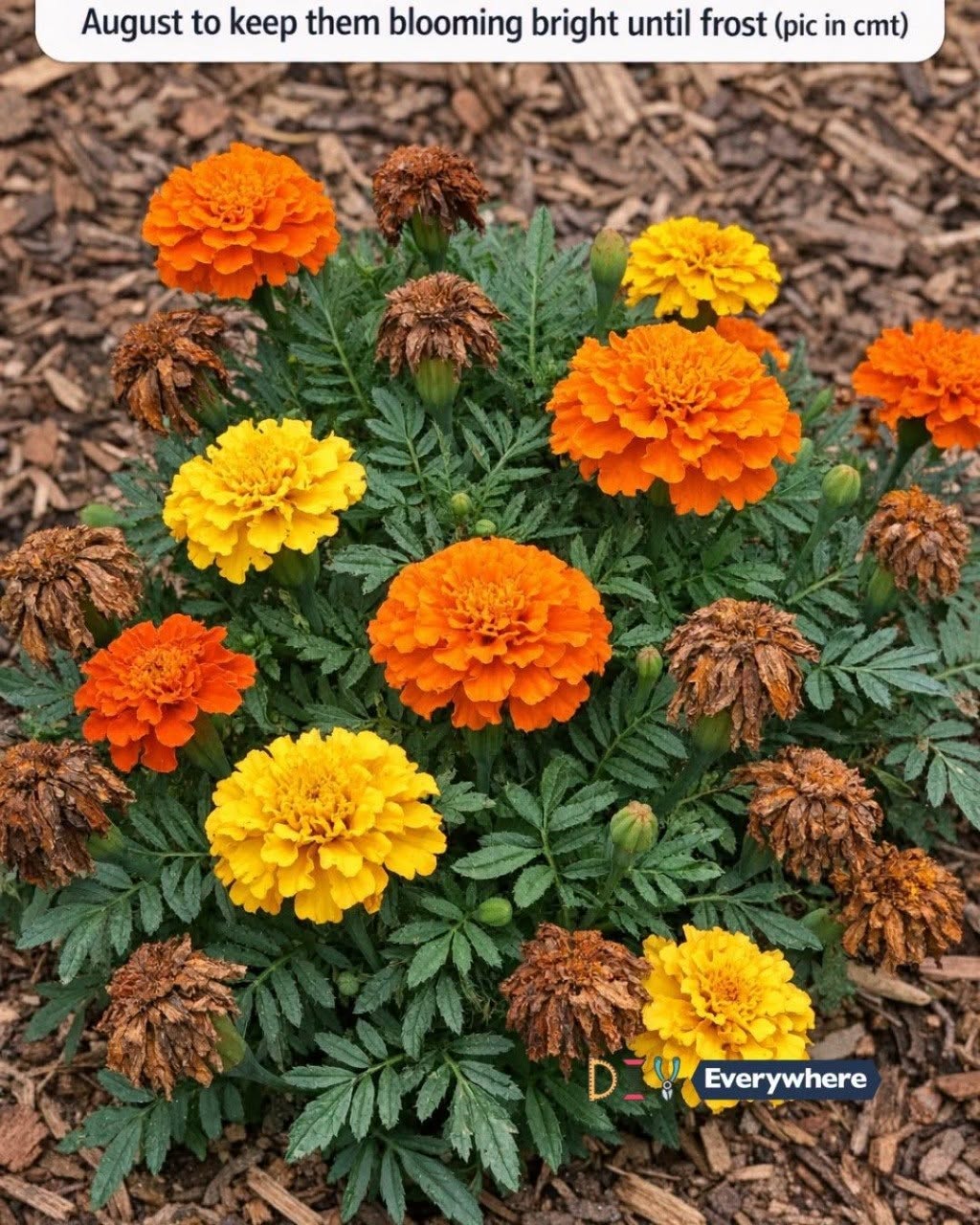
By August, my marigolds are either the stars of the garden or they’re starting to look tired, leggy, and a bit sulky in the heat.
This is the month when they need decisive attention. If I stay on top of a few key jobs now, I can usually keep beds and containers glowing in gold, orange, and russet right up to the first proper frost.
If I neglect them for even two weeks, though, they slow down fast.
What follows is the August checklist I rely on every year to push marigolds through late summer and into autumn. Some of these jobs take only 5 minutes with a bucket and secateurs; others are about correcting watering, feeding, and airflow before mildew, mites, or seed production steal the plant’s energy.
I’m giving you the practical version here: what to cut, how much to water, when to feed, and what signs tell you a marigold is asking for help.
1. Deadhead every faded bloom before it sets seed
If you do only one thing this August, make it deadheading. Marigolds are programmed to make seed once flowers fade, and once a plant shifts into seed-making mode, bloom production slows.
In warm August weather, I check mine every 2 to 3 days because spent flowers can go from cheerful to dry and brown very quickly.
Pinch or snip each faded bloom down to the first set of healthy leaves or to a side shoot with a visible bud. Don’t just pull off the papery petals; remove the whole flower stem if it’s bare and tired.
On compact French marigolds, I often deadhead with my fingers. On taller African marigolds, I use clean snips because the stems are thicker, sometimes 1/8 to 1/4 inch wide.
A 10-minute sweep through the bed can easily remove 30 to 50 spent blooms and trigger another flush.
2. Give them a deep, consistent watering schedule
August is when careless watering catches up with marigolds. They are drought-tolerant once established, but “tolerant” is not the same as “flowering at full strength.”
For bloom production, I aim for about 1 inch of water per week in the ground, and more during heat above 85°F. In containers, I check daily because pots can dry out in a single afternoon, especially terracotta and dark plastic.
Water at soil level early in the morning, ideally before 9 a.m. In beds, I’d rather water deeply once or twice a week than sprinkle lightly every day.
Deep watering encourages stronger roots 4 to 6 inches down, while frequent shallow watering leaves plants stressed and floppy. In pots that are 10 to 12 inches wide, a mature marigold may need enough water that it runs from the drainage hole. If the top 1 inch of soil is dry, it’s time.
3. Feed lightly with a low-nitrogen fertilizer
By August, marigolds have often used up much of the nutrition available in containers and heavily planted borders. If leaves are pale, stems are thin, or flowering has slowed, a light feeding helps.
The key word is light. Too much nitrogen gives you lush green growth and fewer flowers, which is exactly the opposite of what we want this late in the season.
I prefer a balanced or bloom-leaning feed, something like 5-10-5 or 10-10-10 used at half strength. In pots, a liquid feed every 10 to 14 days works well through late August.
In the ground, I’m more restrained and usually feed once, then reassess after 2 weeks. Avoid piling on rich manure or high-nitrogen lawn-type fertilizer near marigolds now.
If you do, you’ll often get leafy plants with disappointingly few buds.
4. Cut back leggy stems to force bushier regrowth
Some marigolds, especially if they were planted a bit close or had an early summer growth spurt, get lanky by August. You’ll notice long stems with flowers perched at the top and not much foliage below.
That shape doesn’t hold up well through storms or late-summer wear. A selective trim can reset the plant.
I usually cut back the worst stems by one-third, making the cut just above a leaf node or side branch. On a 15-inch plant, that might mean removing 4 to 5 inches from the tallest growth.
Don’t shear the whole plant into a dome unless it’s very overgrown and healthy enough to recover. It’s better to stagger your pruning over 7 to 10 days so you don’t lose all the color at once. After trimming, water well and keep deadheading to encourage quick branching.
5. Pull weeds and open up airflow around the plants
August gardens can get crowded. Weeds, sprawling annuals, and nearby perennials often close in around marigolds just when humidity and warm nights make fungal problems more likely.
I like to maintain at least 2 to 3 inches of open space around the base of each marigold and enough room between plants that leaves dry quickly after watering or rain.
Good airflow reduces the risk of powdery mildew, stem rot, and general stagnation. It also makes it easier to spot pests before they multiply.
If mulch has drifted up against the stems, pull it back so the crown isn’t smothered. A thin mulch layer of about 1 inch is plenty around marigolds in summer; 3-inch-deep, soggy mulch pressed against the stem is asking for trouble.
6. Check for spider mites, thrips, and bud damage twice a week
When marigolds suddenly lose vigor in hot, dry weather, I immediately inspect for spider mites. Look under the leaves for fine stippling, bronzing, or delicate webbing.
Thrips can also scar petals and deform buds, leaving flowers streaked or half-open. These problems escalate very quickly in August heat, so catching them early matters more than the exact treatment you choose.
I inspect plants every 3 to 4 days, especially containers near walls, patios, and driveways where reflected heat builds. Start with a strong spray of water directed at the undersides of the leaves in the morning.
Repeat 2 or 3 times a week for mites. If that’s not enough, insecticidal soap can help, but only if it contacts the pests directly.
Remove badly damaged blooms and leaves so the plant stops wasting energy on them.
7. Remove any diseased foliage the moment you see it
Marigolds are generally sturdy, but August can bring leaf spot, mildew, botrytis on spent blooms, or soft rot after heavy rain. The warning signs are black specks, fuzzy gray mold on old flowers, yellowing leaves with brown lesions, or stems turning mushy at the base.
Don’t wait to see whether it “grows out of it.” It usually doesn’t.
Snip off affected leaves and flowers immediately, and throw them in the bin rather than composting if the disease is active and obvious. Clean your pruners with rubbing alcohol or a disinfecting wipe between plants if you’re dealing with multiple cases.
I also thin out old flowers after rain because waterlogged spent blooms are one of the easiest ways botrytis gets started in dense plantings.
8. Refresh container marigolds with soil top-up and drainage checks
Potted marigolds often fade before those in the ground simply because their root zone is under more stress. By August, potting mix can shrink, harden, or become hydrophobic, meaning water runs down the sides without soaking in.
If your marigold pot feels strangely light and the soil pulls away from the rim, it’s time to intervene.
Loosen the top 1 to 2 inches of potting mix gently with your fingers, add a little fresh compost or potting mix, and water slowly in two passes so it fully absorbs.
Make sure the drainage holes are open; I’ve found roots, moss, and even a stray fallen leaf can block them. If a 12-inch pot is rootbound and flowering poorly despite watering, moving it into a container 2 inches wider can buy you another 6 to 8 weeks of performance.
9. Harvest a few flowers, but don’t let too many mature fully
I love cutting marigolds for little jam jars and kitchen-table posies, and regular cutting actually helps keep plants productive. The trick is to cut blooms while they’re fresh rather than leaving them on the plant until they’re old and beginning to form seed.
In August, I often take stems in the cool of the morning when flowers are fully open and the plants are well hydrated.
Use clean snips and cut stems long enough to include at least one leaf node, which encourages branching. If you want seed for next year, choose just 2 or 3 of the best flowers on your strongest plants and mark them with string.
Let those mature fully later in the season. If you let every spent bloom ripen, flowering drops noticeably.
10. Shield them from late-summer extremes, especially reflected heat and pounding rain
Marigolds enjoy sun, but there is a difference between bright open exposure and brutal reflected heat from brick, asphalt, metal fencing, or pale stone.
I’ve seen container marigolds beside a south-facing wall wilt by noon in 90°F weather even when the garden bed 8 feet away looked perfectly comfortable.
If your plants collapse daily despite adequate moisture, the site may be too punishing.
Move pots where they still get 6 to 8 hours of sun but are spared the fiercest late-afternoon blast. After storms, gently shake excess water from heavy double blooms if they’re plastered down with rain.
Tall African marigolds may also need a discreet stake or ring support by August, particularly if flowers are 3 to 4 inches wide and stems have stretched.
One thunderstorm can flatten a plant that was otherwise ready to bloom for another month.
11. Rebalance crowded companion plantings
By this point in summer, marigolds planted with zinnias, petunias, salvias, basil, or tomatoes can disappear under neighboring growth. I like mixed planting, but I’ve learned that marigolds need their own share of light and root space to keep pushing blooms.
If a tomato cage is shading them after 2 p.m. or a petunia mat is covering the crown, flowering will decline.
Trim back neighboring plants enough to restore at least half a day of direct sun and visible air movement. In veggie beds, I sometimes remove one overly sprawling basil stem or tie back a tomato leader rather than sacrificing the marigolds.
These small corrections can make a surprising difference, especially for French marigolds edging a productive kitchen garden.
12. Plan now for frost-season endurance
If you want marigolds blooming until frost, August is the month to think ahead. Strong plants entering September with healthy foliage, active buds, and a manageable shape are far more resilient than exhausted plants already loaded with seed heads.
I stop any heavy pruning by early September in most climates so plants can settle into steady bloom rather than spending energy on major regrowth.
I also keep a close eye on the forecast once nights start dropping below 50°F later in the season. Container marigolds can often be protected or moved, and border plants benefit from staying dry and tidy as weather cools.
The truth is that bright autumn marigolds are usually made in August. The work is not glamorous, but it is absolutely what keeps that brilliant orange and gold show going when other annuals are already fading out.