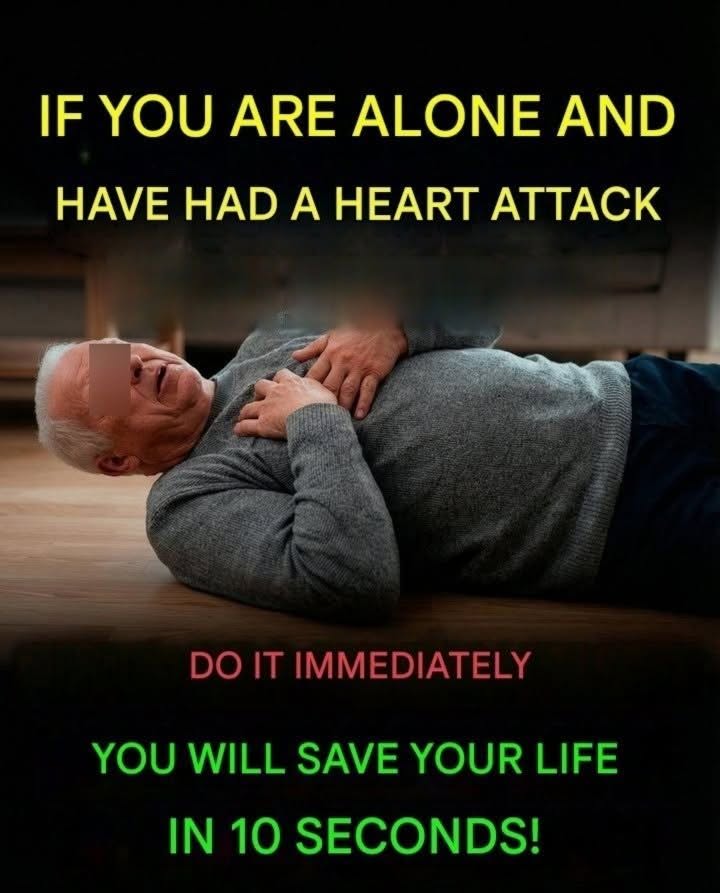
A heart attack can happen without warning.
One moment you may feel perfectly fine, and the next you could experience chest discomfort, shortness of breath, or a feeling that something is seriously wrong.
Many people worry about one frightening question:
What if a heart attack happens when I’m completely alone?
The good news is that medical experts say there are important steps you can take immediately that may improve your chances of getting help quickly and receiving life-saving treatment.
First: Recognize the Warning Signs
Heart attack symptoms can vary from person to person, but common signs include:
- Chest pain or pressure
- Tightness in the chest
- Pain spreading to the arm, shoulder, neck, jaw, or back
- Shortness of breath
- Cold sweats
- Nausea
- Dizziness
- Unusual fatigue
Some people experience mild symptoms, while others have severe pain.
Call Emergency Services Immediately
If you think you may be having a heart attack, do not
wait to see if symptoms improve.
Call emergency services immediately.
Many people make the mistake of trying to drive themselves to the hospital, but emergency responders can begin treatment while transporting you.
Every minute matters because heart muscle can be damaged when blood flow is blocked.
Unlock Your Door If Possible
If you’re alone and able to move safely:
- Unlock your front door
- Turn on lights
- Keep your phone nearby
This can help emergency personnel reach you faster if your condition worsens.
Sit Down and Stay Calm
Avoid physical exertion.
Sit or lie down in a comfortable position and focus on slow, steady breathing while waiting for help.
Panic can increase strain on the heart.
If Prescribed, Take Your Heart Medication
If your doctor has prescribed medication for chest pain or heart disease, follow your doctor’s instructions.
Only take medications that have been specifically prescribed for you.
Consider Aspirin If
Appropriate
Many health organizations advise chewing a standard aspirin during a suspected heart attack if:
- You are not allergic to aspirin
- A healthcare professional has not advised you to avoid it
Aspirin may help reduce blood clotting while waiting for emergency care.
However, it should not replace calling emergency services.
Continue reading by clicking the ( NEXT 》 ) button below!
The Dangerous Myth of “Cough CPR”
For years, social media posts have claimed that repeatedly coughing during a heart attack can save your life.
Experts warn that this advice is often misunderstood.
“Cough CPR” is not a recommended self-treatment for someone alone experiencing a heart attack.
The safest action is to call emergency services immediately and follow professional medical guidance.
Why Acting Quickly Matters
The sooner treatment begins, the greater the chance of limiting damage to the heart.
Modern treatments can often restore blood flow and save heart muscle, but time is
critical.
Many lives have been saved because someone recognized the warning signs and sought help immediately.
Prevention Is Still the Best Protection
You can lower your risk of heart disease by:
- Not smoking
- Exercising regularly
- Maintaining a healthy weight
- Controlling blood pressure
- Managing cholesterol levels
- Eating a balanced diet
- Getting regular medical checkups
Final Thoughts
A heart attack is a medical emergency.
If you are alone and think you may be having one, don’t waste precious time searching for miracle tricks or waiting for symptoms to pass.
Call emergency services immediately, stay calm, and follow professional medical advice.
The fastest way to save your life may simply be recognizing the symptoms and getting help as quickly as possible.