Charcoal is one of those materials people tend to associate with a single purpose—a glowing barbecue on a summer afternoon—yet a plain piece of untreated natural lump charcoal has a surprisingly interesting structure hidden beneath its black surface. Carbon-rich and extremely porous, charcoal has been used for generations in practical household tasks, from absorbing unwanted odors to helping manage moisture around storage areas, and once you understand what those tiny pores can do, an inexpensive bag of charcoal suddenly starts looking less like fuel and more like raw material for several clever household projects.
There is one important detail behind the viral idea of “boiling charcoal,” however: ordinary boiling mainly washes and wets charcoal. Producing commercial activated carbon requires specialized processing that creates a vastly greater internal surface area. For household projects, plain clean charcoal can still be remarkably useful without trying to reproduce that industrial process at home.
And
some of the simplest ideas can even be packaged into inexpensive handmade household products.
Start With the Right Charcoal
For these projects, I use only plain, untreated natural lump charcoal.
I avoid barbecue briquettes containing lighter fluid, ignition additives, fragrances, or other ingredients because the charcoal will be used around the home rather than simply burned outdoors.
Break several pieces into smaller chunks and shake away loose dust.
If they are especially dusty, rinse them thoroughly with water.
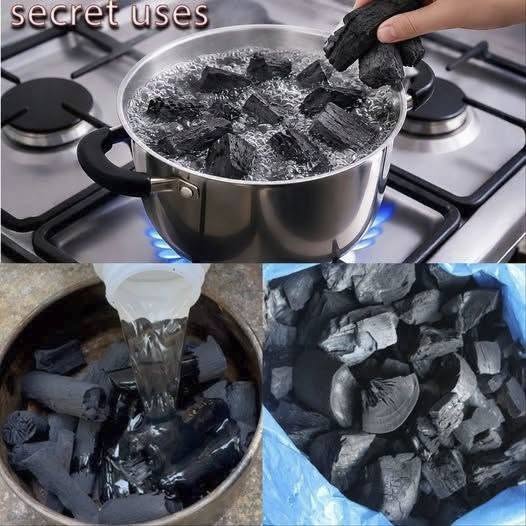
Then comes the boiling trick.
Place the charcoal in an old stainless-steel saucepan reserved for household projects, cover it with water, and allow it to simmer gently for approximately 10 minutes.
The water may become surprisingly dark as loose dust and soluble residue leave the surface.
Drain it carefully and rinse again.
Then spread the pieces somewhere warm and ventilated until they are completely dry.
Drying matters because most of the proje
some of the simplest ideas can even be packaged into inexpensive handmade household products.
Start With the Right Charcoal
For these projects, I use only plain, untreated natural lump charcoal.
I avoid barbecue briquettes containing lighter fluid, ignition additives, fragrances, or other ingredients because the charcoal will be used around the home rather than simply burned outdoors.
Break several pieces into smaller chunks and shake away loose dust.
If they are especially dusty, rinse them thoroughly with water.
Then comes the boiling trick.
Place the charcoal in an old stainless-steel saucepan reserved for household projects, cover it with water, and allow it to simmer gently for approximately 10 minutes.
The water may become surprisingly dark as loose dust and soluble residue leave the surface.
Drain it carefully and rinse again.
Then spread the pieces somewhere warm and ventilated until they are completely dry.
Drying matters because most of the projects
Secret Use #1: The Refrigerator Odor Jar
This is probably the easiest project.
Take a small open glass container and fill it halfway with completely dry charcoal pieces.
Place it securely toward the back of the refrigerator.
Charcoal’s porous structure can adsorb various molecules onto its surface, which is why carbon materials have such a long history in filtration and odor-management applications.
For a homemade refrigerator jar, I like using relatively small chunks because they expose more surface than one enormous piece.
The finished jar costs almost nothing to make and requires no added fragrance.
Secret Use #2: Make Shoe-Deodorizing Pouches
This is where the “make money” idea becomes more interesting.
Take clean, completely dried charcoal and crush it into small granules rather than dusty powder.
Place the granules inside a tightly woven breathable cotton pouch and close it securely.
Now you have
a reusable charcoal pouch that can sit inside a shoe cabinet, gym bag, wardrobe, or other dry storage space.
Make two matching pouches, add a simple fabric tie and label, and suddenly an inexpensive household material has become a handmade closet accessory.
The key is containment: charcoal dust stains beautifully, which is fantastic when you want black pigment and considerably less fantastic when it lands on white sneakers.
Secret Use #3: The Wardrobe Freshness Jar
Fill a decorative jar with charcoal chunks and cover the opening with breathable fabric secured firmly around the rim.
Place it somewhere stable inside a wardrobe.
I particularly like this idea because there is no artificial perfume competing with clothing fragrance or laundry products.
For a more decorative appearance, use a wide glass jar, arrange similarly sized charcoal pieces inside, and finish the top with natural linen.
It looks surprisingly elegant for something that began