
Let me tell you about the first time I saw a white string in my egg.
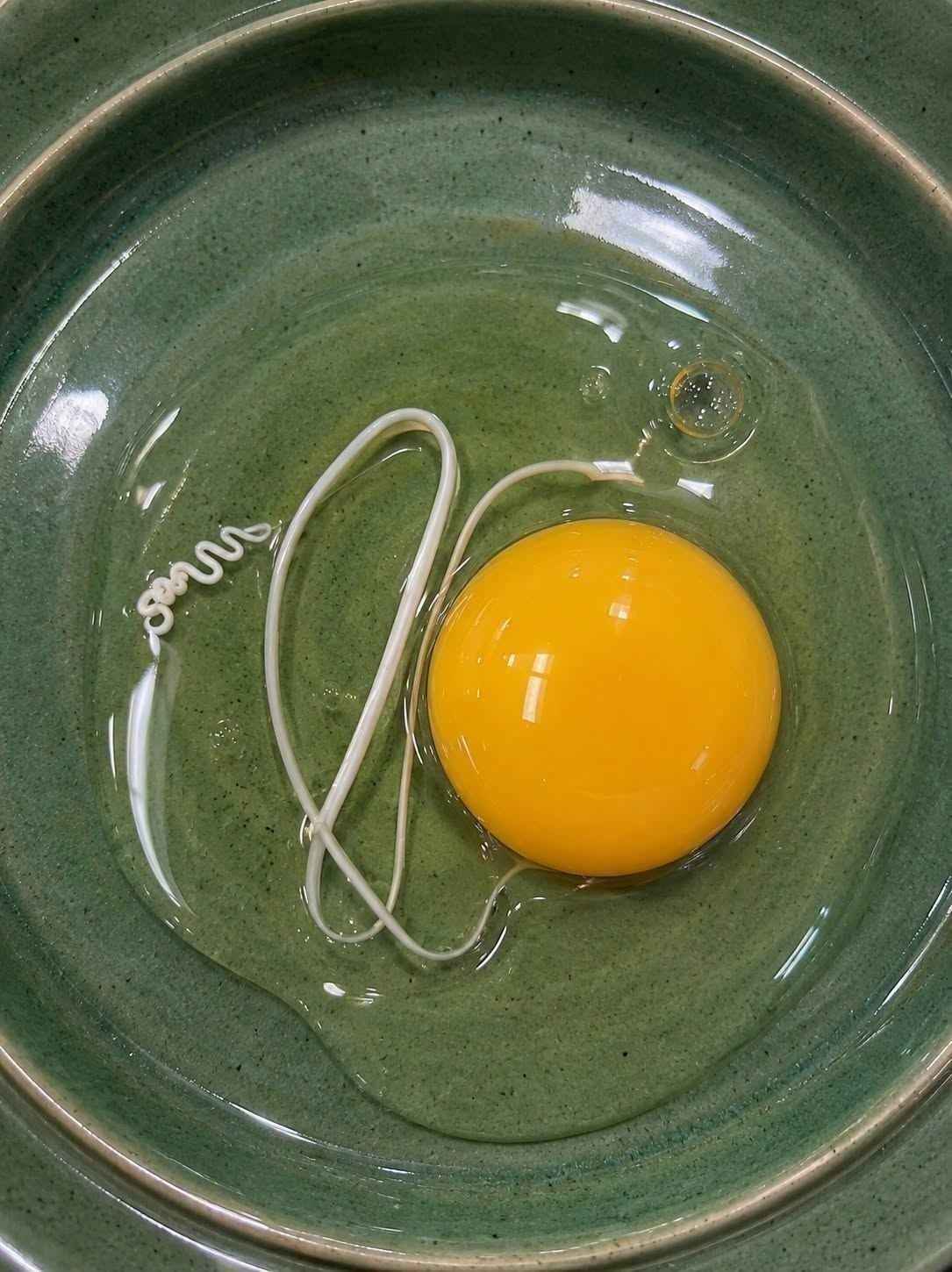
I was in my late twenties, standing in my kitchen and making a simple, comforting breakfast. I cracked a fresh egg into a bowl, and there it was: a strange, white strand floating through the clear egg white. It was thin, slightly twisted, and looked almost like a tiny piece of string or a little worm.
My stomach immediately tightened. I froze. I stared at the bowl as if it contained something dangerous.
I did that thing we all do when we’re suddenly scared about our food: I immediately assumed the worst. Is it a parasite? A worm? Some kind of contamination? My mind raced to salmonella warnings, grocery store recalls, and all the scary things I’d read online about food safety. I could feel my appetite slipping away, and my hand reached for the trash can.
But before I tossed it, I decided to pause and do a little research. What I discovered was not only deeply reassuring, but actually quite fascinating. That mysterious white string wasn’t a threat at all. It was a brilliant piece of natural engineering.
If you have ever cracked an egg and felt that same sudden wave of panic, take a slow, deep breath. Let’s gently explore the beautiful science behind this common kitchen mystery, and why that little string is actually something to celebrate.
🥚 What Is That White String?
The white string you see in your egg is called the chalaza (pronounced kuh-LAY-zuh).
It is a natural, twisted cord of protein that is made of the exact same thick, high-quality protein as the rest of the egg white (albumen). It is a completely normal, expected part of the egg’s anatomy.
Most importantly: It is not a worm. It is not a parasite. It is not a sign of contamination. It is 100% safe to eat.
🛡️ The Brilliant Function of the Chalaza
To understand why the chalaza is there, it helps to think of the egg as a tiny, self-contained protective capsule.
The chalaza acts like a natural bungee cord or a shock absorber. Its primary job is to anchor the yolk and hold it perfectly in the center of the egg. By keeping the yolk suspended in the middle, the chalaza prevents it from bumping up against the fragile inner membrane of the shell.
In nature, if an egg were to be fertilized, this central positioning is crucial. It protects the developing embryo from temperature fluctuations and physical jolts as the mother bird moves. Even in the unfertilized eggs we buy at the grocery store, this brilliant biological design remains intact, keeping the yolk perfectly centered and protected.
✨ The Hidden Benefit: It’s a Sign of Freshness!
Read more on next page✨ The Hidden Benefit: It’s a Sign of Freshness!
Here is the best part about the chalaza: A prominent, thick, and clearly visible chalaza is actually a hallmark of a very fresh egg.
As an egg ages and sits in the refrigerator, the protein structure of the egg white naturally begins to break down and thin out. As this happens, the chalaza weakens, thins, and eventually dissolves almost completely.
So, if you crack an egg and see those distinct, twisted white strands anchoring the yolk, you can smile. It is nature’s way of telling you that the egg is fresh, the protein structure is still strong, and it is at its peak quality. (This pairs beautifully with checking the Julian date on your carton for ultimate freshness!)
🍳 To Eat or Not to Eat? Culinary Tips for the Chalaza
Since the chalaza is completely safe and tasteless, you have total freedom in how you handle it, depending on what you are cooking.
The Dish You’re Making
The Gentle Recommendation
Why?
Scrambled Eggs or Omelets
Leave it in.
It will cook right into the egg and disappear. It adds a tiny bit of extra protein and no one will ever notice.
Fried or Sunny-Side Up
Leave it in.
It cooks down and becomes invisible against the white of the egg.
Smooth Custards or Puddings
Fish it out or strain it.
If you are making a delicate, silky dessert (like a crème brûlée or flan), you might want to remove it with a fork or strain the egg mixture through a fine-mesh sieve to ensure a perfectly smooth texture.
Meringues or Soufflés
Remove it.
For recipes that rely on whipping egg whites to stiff, glossy peaks, the chalaza can interfere with the foam. It’s best to separate it before whipping.
Homemade Egg Salad
Leave it in.
When you mash the hard-boiled eggs for a nostalgic, creamy egg salad, the chalaza blends right in and adds to the rich, protein-packed texture.
❓ Frequently Asked Questions
Q: Can an egg have more than one chalaza?
A: Yes! It is very common to see two chalazae, one on each side of the yolk, acting like twin anchors to keep it perfectly centered. This is completely normal and a great sign of freshness.
Q: Does the chalaza affect the taste of the egg?
A: Not at all. It is made of the same tasteless egg-white protein. You will not taste it, nor will it change the flavor of your meal.
Q: What if the chalaza is bloody or has a red spot?
A: Occasionally, you might see a tiny red or brown spot on or near the chalaza. This is a “meat spot” or a tiny burst blood vessel from the hen. It is natural, harmless, and completely safe to eat, though you can easily flick it out with the tip of a knife or fork if it bothers you visually.
Q: Do organic or free-range eggs have more chalazae?
A: The presence of the chalaza is determined by the freshness of the egg, not the farming method. However, because farm-fresh or local eggs often spend less time in transit and storage, they frequently display very prominent, thick chalazae.
💙 A Compassionate Closing Thought
If you are reading this and realizing you have thrown away perfectly good eggs in the past out of fear, please take a slow, deep breath and give yourself a gentle, understanding smile.
🥚 Your caution comes from a good place. Worrying about food safety is a natural, protective instinct. You were simply trying to care for yourself and your lovedones. Give yourself grace for jumping to conclusions; it is a very human reaction to the unexpected.
🥚 Nature is beautifully designed. The next time you crack an egg, look for that little white string with a sense of wonder rather than worry. It is a tiny, edible marvel of biological engineering, working quietly to protect the heart of the egg.
🥚 Freshness is a quiet joy. Knowing that this little strand is a badge of honor for a fresh, high-quality egg can make your morning breakfast routine feel a little more special. You are nourishing your body with vibrant, wholesome food.
🥚 Simplicity is a gift. Whether you are making a quick scrambled egg, a nostalgic egg salad sandwich, or a fancy custard, you don’t need to fear the ingredients. Embrace the simple, natural beauty of the food on your plate.
That little white string isn’t a warning sign.
It is a natural anchor.
It is a badge of freshness.
And it is a gentle reminder that nature has already done the hard work of protecting your food.
So, the next time you crack an egg…
Notice the chalaza with curiosity, not fear.
Leave it in your scramble, or gently strain it for your custard.
And enjoy the simple, nourishing comfort of a meal well-made.
What is your favorite simple, comforting way to prepare eggs? Do you have a cherished family recipe, like a nostalgic egg salad or a cozy breakfast scramble, that always brings you joy? Share your cozy kitchen memories and practical wisdom respectfully in the comments below.