

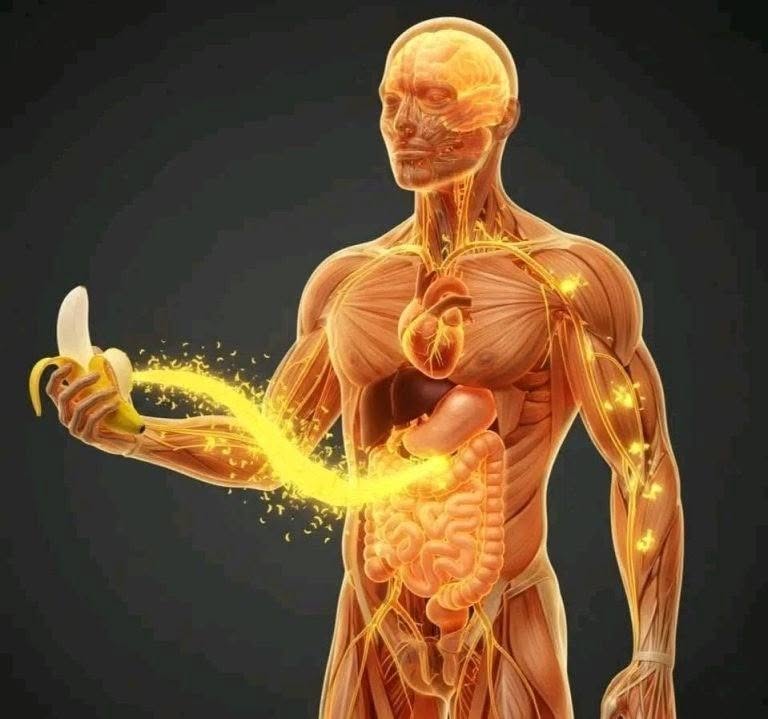
Bananas are one of the world’s most convenient fruits. They’re inexpensive, naturally sweet, easy to carry, and packed with several useful nutrients. Fruits& Vegetables
But what happens when you eat a banana in the evening or before bed?Biological Sciences
Social media is full of claims that nighttime bananas can dramatically improve sleep, prevent muscle cramps, boost serotonin, and even transform your health overnight.
The reality is more interesting — and more nuanced.
Bananas provide carbohydrates, fiber, potassium, vitamin B6, and smaller amounts of magnesium. A medium banana contains roughly 422 mg of potassium and about 0.4 mg of vitamin B6.
Discover more
Food & Drink
Vitamins & Supplements
Metals & Mining
So eating one in the evening can certainly be part of a healthy diet.Bananas
But does the timing make it special?
Here’s what the evidence actually suggests.
A Banana Can Be a Convenient Evening Snack
If you become hungry a few hours after dinner, a banana can be a simple alternative to cookies, candy, or other highly processed snacks. Snacks
Bananas provide carbohydrates along with fiber and naturally occurring nutrients.Language Resources Fruits& Vegetables
Unlike caffeinated snacks or drinks, bananas contain no caffeine.
For many healthy people, that makes a banana a reasonable light evening snack when hunger strikes.
However, there’s no evidence that bananas suddenly become dramatically healthier simply because you eat them at night.
The nutritional value is largely the same whether you eat one in the morning, afternoon, or evening.
Could Eating a Banana Before Bed Help You Sleep?
This is probably the most popular claim.
Bananas contain several nutrients involved in normal nervous-system and sleep-related biological processes, including magnesium, potassium, vitamin B6, carbohydrates, and small amounts of tryptophan.
That has led to the idea that bananas are a natural sleep aid.
Interestingly, there is some preliminary research.
A small 2024 clinical study examined 21 adults with primary insomnia who were assigned to banana, milk, or control groups. After six weeks, subjective sleep-quality scores improved in the banana and milk groups. Dairy& Eggs
But there’s an important limitation:
The study was extremely small — the banana group contained only seven people. GetOrganic Produce
Some objective sleep measures also did not show significant differences between groups. Therefore, this study is interesting, but it isn’t enough to conclude that eating bananas before bed reliably treats insomnia.
Think of a banana as a nutritious bedtime snack, not a sleeping pill.
Bananas Provide Potassium for Normal Muscle and Nerve Function
Bananas are famous for potassium, and for good reason.
A medium banana provides approximately 422 mg, or about 9% of the Daily Value.
Your body needs potassium for several important functions, including:
Normal muscle contraction
Nerve transmission
Proper heart function
Kidney functionFood & Drink
But there’s a common misconception.
A Banana Isn’t an Extremely High-Potassium “Superfood”
Bananas contain a useful amount of potassium, but they’re not the only source — and they’re certainly not the richest. GetOrganic Produce
Potatoes, beans, lentils, dried fruits, vegetables, dairy products, and other foods can also provide substantial amounts.
Adults generally need thousands of milligrams of potassium each day, so one banana won’t meet your entire requirement.Fruits & Vegetables ConsultA Nutritionist
Discover more
Vitamins
bananas
food
The best strategy is to eat a varied diet containing multiple potassium-rich foods.
What About Nighttime Muscle Cramps?
You may have heard:
“Eat a banana before bed and you’ll never get leg cramps.”
That’s an exaggeration.Anatomy
Discover more
Nutrition
Vitamin
foods
Potassium is essential for normal muscle function, but nighttime leg cramps can have numerous causes.
Simply experiencing cramps doesn’t prove that you’re potassium deficient, and eating a banana isn’t a guaranteed treatment.
If cramps happen frequently, are severe, or appear alongside swelling, weakness, numbness, or other unexplained symptoms, it’s worth discussing them with a healthcare professional rather than relying on one food.
Bananas Provide Vitamin B6
This nutrient doesn’t receive as much attention as potassium, but bananas are a notable source. OrderHealth Supplements
A medium banana provides approximately 0.4 mg of vitamin B6, about 25% of the Daily Value.
Vitamin B6 participates in more than 100 enzyme reactions in the body and plays important roles in metabolism and nervous-system function.
It’s also involved in pathways related to neurotransmitters.
This is partly why you’ll sometimes see claims that bananas “increase serotonin” or instantly improve mood. Bananas
But that’s too simplistic.
Eating a banana provides nutrients your body uses in normal biological processes; it doesn’t mean one banana will produce a dramatic serotonin surge or immediately change your mood.
They Provide Carbohydrates for Energy
A banana’s calories come predominantly from carbohydrates.
That’s one reason bananas are popular among physically active people.
If you’ve exercised in the evening, a banana can provide carbohydrates as part of a post-workout snack.
Combining it with a protein source — such as plain yogurt — may create a more substantial snack.
But again, there’s no unique nighttime metabolic effect required to get these nutrients.
What About Digestion?
Yes.
As bananas ripen, their carbohydrate composition changes. Bananas
Less-ripe bananas generally contain more resistant starch, while ripening converts more starch into sugars.
That’s why a very ripe banana tastes considerably sweeter than a green one.
Neither is automatically “good” or “bad.”
Which one you prefer can depend on taste, digestion, and individual nutritional needs.
When Is the Best Time to Eat a Banana?
There’s no universally perfect time.
You can eat bananas:
At breakfast with oatmeal or yogurt.
Before or after exercise as a convenient carbohydrate-containing snack.
During the afternoon when you need something quick.
Or in the evening if you’re hungry and tolerate them well.
If you specifically want to try a banana as an evening snack, eating a modest portion before bedtime is reasonable for most healthy adults.
Just don’t expect it to function as a treatment for insomnia.
Who Should Be More Careful?
Bananas are safe for most people, but individual medical circumstances matter. GetOrganic Produce
Talk with a healthcare professional about your diet if you have significant kidney disease, problems controlling blood potassium, or take medications that can substantially affect potassium levels.
People managing diabetes should consider bananas within their overall carbohydrate plan rather than assuming fruit can be eaten in unlimited amounts.
So, Does Eating Bananas in the Evening Have Special Benefits?
Possibly in some circumstances — but don’t believe every viral claim.
A banana can provide a light, nutrient-rich snack and may be more suitable before bed than a heavy or highly processed alternative.
A small clinical study has even produced preliminary evidence suggesting bedtime banana consumption may improve some measures of sleep quality in people with insomnia. However, the study included only 21 participants overall, so much larger and better studies are needed before drawing strong conclusions.
There’s currently no good reason to describe bananas as a guaranteed natural treatment for insomnia, cramps, anxiety, or other medical problems.
The Bottom Line
Eating a banana in the evening can be a perfectly healthy choice for many people. OrderDNA Kits
Bananas provide potassium, vitamin B6, carbohydrates, fiber, and other nutrients, making them a convenient whole-food snack.
They may also be worth trying as a light bedtime snack if hunger is keeping you awake.
But the biggest benefits come from the banana itself — not from a magical effect that suddenly occurs after sunset.
Good health depends far more on your overall eating pattern, physical activity, sleep habits, and medical needs than on eating one particular fruit at a particular hour.
Medical Disclaimer: This article is for general informational and educational purposes only and does not replace individualized medical or nutritional advice.