

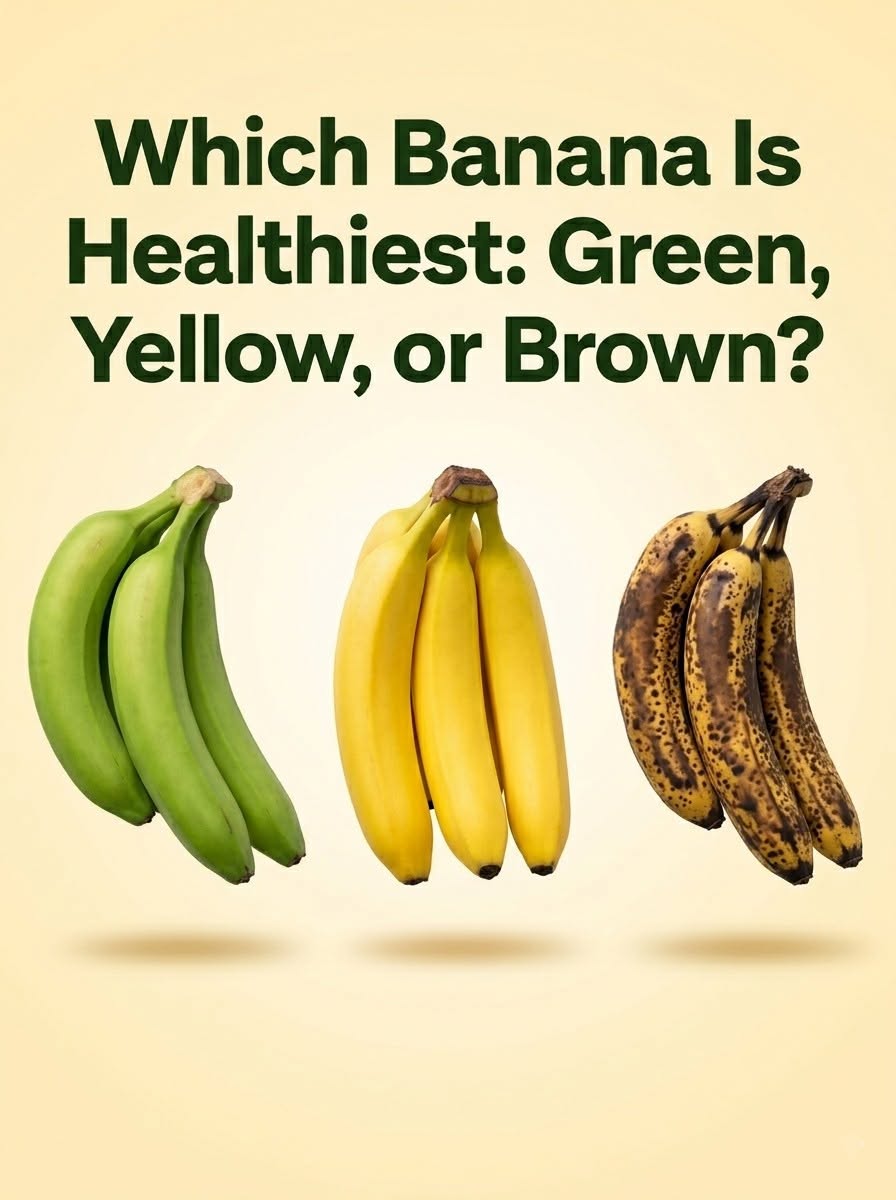
Green, Yellow, or Brown Bananas: Which One Offers the Most Health Benefits?
Bananas are among the most popular fruits in the world. They are affordable, convenient, naturally sweet, and packed with important nutrients such as potassium, vitamin B6, vitamin C, magnesium, and fiber. Yet despite their popularity, a surprisingly common question continues to spark debate among nutrition experts and health-conscious consumers:
Which banana is healthiest—green, yellow, or brown?
Many people instinctively reach for bright yellow bananas because they look fresh and taste sweet. Others prefer slightly green bananas because they are firmer and less sugary. Some even wait until bananas develop brown spots, believing that overripe fruit contains special health benefits.
The truth is that bananas change significantly as they ripen. Their color isn’t just cosmetic. The nutritional composition of the fruit transforms from stage to stage. Starches become sugars, texture softens, sweetness increases, and even digestive effects can vary. The “best” banana depends largely on your personal health goals.
In this comprehensive guide, we’ll explore exactly what happens during the ripening process and determine whether green, yellow, or brown bananas deserve the title of healthiest.
Understanding the Banana Ripening Process
A banana goes through several distinct stages of ripeness:
- Dark green
- Light green
- Green-yellow
- Fully yellow
- Yellow with green tips
- Yellow with brown spots
- Mostly brown
During this journey, complex carbohydrates gradually convert into simple sugars. The fruit becomes sweeter, softer, and easier to digest. At the same time, levels of resistant starch decline while antioxidant activity increases.
Because of these changes, each stage provides unique benefits.
Green Bananas: The Gut-Friendly Powerhouse
Green bananas are harvested before they fully ripen. They are firm, less sweet, and contain significantly more resistant starch than ripe bananas. Resistant starch behaves similarly to dietary fiber because it resists digestion in the small intestine. Instead, it travels to the colon, where beneficial gut bacteria ferment it.
Benefits of Green Bananas
1. Better Blood Sugar Control
One of the most notable advantages of green bananas is their lower glycemic impact. Since much of their carbohydrate content exists as resistant starch rather than sugar, they produce a slower rise in blood glucose levels after eating.
For people trying to manage blood sugar levels, prediabetes, or metabolic health, green bananas may be a smart choice.
2. Improved Gut Health
Resistant starch acts as a prebiotic, feeding beneficial bacteria in the digestive tract. When these bacteria ferment resistant starch, they produce short-chain fatty acids that support colon health and may help maintain a balanced gut microbiome.
A healthy microbiome has been linked to improved digestion, stronger immunity, and reduced inflammation.
3. Greater Feeling of Fullness
Green bananas are rich in resistant starch and pectin, both of which can help increase satiety. Because digestion occurs more slowly, people often feel full longer after eating a green banana compared to a ripe one.
This makes them attractive for individuals focused on weight management.
Potential Drawbacks
Green bananas aren’t perfect for everyone.
Some individuals experience bloating, gas, or digestive discomfort because resistant starch is harder to digest. Others simply dislike the firmer texture and mildly bitter flavor.
Yellow Bananas: The Perfect Middle Ground
When most people think of a banana, they picture a bright yellow fruit. At this stage, some starch has converted into natural sugars, creating a balance between sweetness and nutritional value.
Many nutrition experts consider slightly yellow bananas with a hint of green to be the ideal compromise between taste and health benefits.
Benefits of Yellow Bananas
1. Easier Digestion
As bananas ripen, starches break down into simpler carbohydrates that are easier for the body to process. This means yellow bananas are generally gentler on the digestive system than green bananas.
People with sensitive stomachs often tolerate yellow bananas better.
2. Quick and Sustainable Energy
The conversion of starch into natural sugars provides readily available energy. This makes yellow bananas an excellent snack before exercise, during busy workdays, or whenever a quick energy boost is needed.
Athletes frequently choose ripe bananas because they offer easily digestible carbohydrates without the heaviness of many processed snacks.
3. Rich in Essential Nutrients
Yellow bananas remain excellent sources of:
- Potassium
- Vitamin B6
- Vitamin C
- Magnesium
- Manganese
These nutrients support heart health, nerve function, muscle contraction, and immune function.
4. Better Taste for Most People
Taste matters. If you dislike eating a certain food, you’re less likely to include it in your diet consistently.
Yellow bananas strike a balance between sweetness and texture, making them the preferred choice for most consumers.
Brown-Spotted Bananas: The Antioxidant Champions
Many people assume bananas become unhealthy once brown spots appear. In reality, spotted bananas remain highly nutritious.
As bananas continue ripening, starches convert almost completely into simple sugars. This makes them softer and sweeter while also increasing antioxidant activity.
Benefits of Brown Bananas
1. Highest Antioxidant Levels
Research and nutrition experts suggest that antioxidant activity rises as bananas mature. Brown-spotted bananas contain elevated levels of antioxidant compounds that help combat oxidative stress in the body.
Antioxidants play a role in protecting cells from damage caused by free radicals.
2. Extremely Easy to Digest
Because much of the starch has already broken down into simple sugars, brown bananas require less digestive effort. This can be beneficial for:
- Older adults
- Young children
- People recovering from illness
- Individuals with digestive sensitivity
3. Excellent for Athletic Recovery
The natural sugars in brown bananas can quickly replenish glycogen stores after exercise. Combined with potassium, they make an effective post-workout snack.
4. Perfect for Cooking and Baking
Brown bananas shine in recipes such as:
- Banana bread
- Muffins
- Pancakes
- Smoothies
- Oatmeal
Their natural sweetness often reduces the need for added sugar.
Potential Drawbacks
The primary downside of brown bananas is their higher sugar content. Since resistant starch has largely disappeared, they may produce a faster blood sugar response than greener bananas.
Individuals managing diabetes or blood sugar concerns may prefer less ripe bananas.
Comparing the Three Stages
Green Bananas
Best for:
- Blood sugar management
- Gut health
- Weight management
- Increased satiety
Characteristics:
- Lowest sugar
- Highest resistant starch
- Firm texture
- Mild bitterness
Yellow Bananas
Best for:
- Everyday nutrition
- Balanced energy
- General wellness
- Most consumers
Characteristics:
- Moderate sugar
- Moderate fiber
- Pleasant sweetness
- Easy digestion
Brown Bananas
Best for:
- Antioxidants
- Quick energy
- Baking
- Digestive comfort
Characteristics:
- Highest sugar
- Soft texture
- Sweetest flavor
- Maximum ripeness
What Nutrition Experts Say
Current nutritional evidence suggests that no single banana stage is universally superior. Instead, each ripeness level offers unique advantages. Health experts increasingly emphasize matching banana ripeness to individual health goals rather than searching for one “perfect” stage.
A person focused on blood sugar control may benefit most from green bananas, while an athlete seeking fast fuel might prefer ripe yellow or brown bananas.
The Blood Sugar Perspective
Blood sugar management is one of the most discussed aspects of banana ripeness.
Green bananas contain more resistant starch, which slows digestion and helps prevent rapid blood sugar spikes. Yellow bananas create a moderate response, while brown bananas generally produce the fastest increase in blood glucose because they contain more readily available sugars.
However, experts note that pairing bananas with protein or healthy fats can help reduce blood sugar fluctuations regardless of ripeness. Examples include:
- Banana with peanut butter
- Banana with Greek yogurt
- Banana with nuts
- Banana in a protein smoothie
These combinations improve satiety and create a more balanced snack.
The Gut Health Perspective
If gut health is your primary concern, greener bananas likely hold the advantage.
Their resistant starch acts as a prebiotic fiber, feeding beneficial gut bacteria and supporting the production of short-chain fatty acids that contribute to digestive wellness.
As bananas ripen, resistant starch levels fall dramatically. While yellow and brown bananas still provide nutritional benefits, they don’t deliver the same prebiotic effects as greener fruit.
The Weight Loss Perspective
Many people wonder whether one banana stage is better for weight loss.
The answer isn’t straightforward.
Green bananas may promote fullness due to their resistant starch and fiber content. This could potentially reduce overall calorie intake throughout the day.
However, weight loss ultimately depends on total dietary patterns rather than banana color alone.
The best banana for weight management is often the one you’ll consistently enjoy eating as part of a balanced diet.
The Athletic Performance Perspective
Athletes may choose banana ripeness based on timing.
Before exercise:
- Yellow bananas provide accessible energy without excessive sweetness.
During endurance events:
- Riper bananas offer rapidly available carbohydrates.
After workouts:
- Brown bananas help replenish glycogen stores quickly.
Green bananas may be less ideal immediately before intense activity because resistant starch slows digestion.
What Does the Public Prefer?
Online discussions reveal surprisingly strong opinions regarding banana ripeness.
Many consumers prefer yellow bananas with slightly green tips because they offer firmness without bitterness. Others love the sweetness of spotted bananas, while some enthusiasts insist green bananas provide superior texture and satiety. Community discussions consistently show that personal preference plays a major role in determining the “best” banana.
This reinforces an important point: nutritional differences exist, but enjoyment matters too.
So Which Banana Is Actually Healthiest?
To see the full cooking instructions, go to the next page or click the Open button (>) and don't forget to SHARE it with your friends on Facebook.