

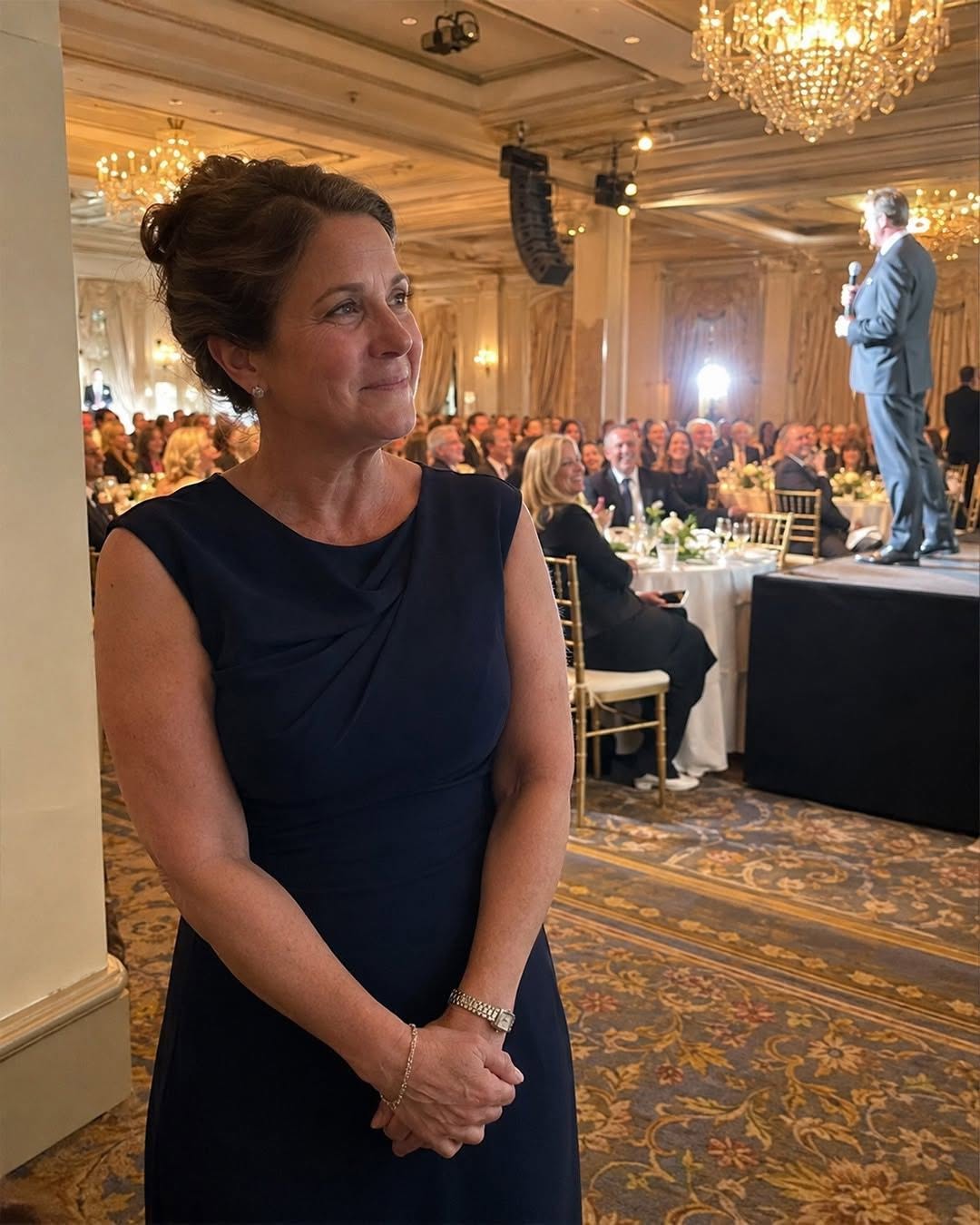
“Ten dollars,” my husband said into the microphone, smiling as if he were offering off a centerpiece instead of the woman who had stood beside him for twenty-two years.
The ballroom laughed.
Two hundred guests in tuxedos and silk dresses laughed with their wineglasses lifted and their dinner plates cleared. The chandeliers above us gave everything a soft golden glow, the kind of light that makes cruelty look expensive if no one bothers to name it.
Thomas glanced down at me from the stage with that polished, charming smile everyone in Manhattan seemed to admire.
“Who wants this useless wife?” he said.
A few people gasped, but most of them laughed harder.
Someone at a table near the front raised a hand and called, “I’ve got ten!”
The room broke open again.
I stood beside the stage in my navy dress, my hands folded in front of me, feeling the laughter land on my skin one piece at a time. I did not cry. I did not run. I did not grab the microphone. After twenty-two years of marriage to Thomas Bennett, I had learned how to stand still while he made a room love him.
But that night, for the first time, standing still did not feel like obedience.
It felt like witness.
The Bennett Foundation gala had been planned for months. In truth, I had planned most of it. Thomas had approved the big ideas: the venue, the donors, the glossy program with his name in bold letters and mine tucked beneath it like an afterthought. I had handled the rest.
Seating charts. Sponsor calls. Floral arrangements. The silent auction table. The dinner menu. The list of donors who needed to be greeted by name. The handwritten thank-you cards waiting in a neat stack in my study at home.
That was my role.
Thomas was the face.
I was the scaffolding.
Nobody photographs scaffolding when the building looks beautiful.
The Meridian ballroom was exactly the kind of place Thomas loved. Tall windows looking down over the city. White linen. Crystal glasses. Waiters moving quietly between tables. A string quartet in the corner playing something elegant enough to make wealthy people feel generous.
I had arrived early, as I always did, because arriving early gave me something useful to do before becoming decorative. I checked the place cards twice. I asked the coordinator to move Mrs. Alden away from the dessert table because she hated the draft from the service doors. I made sure Senator Whitcomb’s wife had the vegetarian entrée she had requested but would pretend not to remember requesting.
Small details. Invisible details.
The kind of work that prevents powerful people from feeling inconvenienced.
Thomas arrived twenty minutes before the first guests, surrounded by two board members and a photographer. His tuxedo fit perfectly. His hair was silver at the temples in a way women at fundraisers described as distinguished. He kissed my cheek without quite looking at me.
“You handled everything?” he asked.
“Everything’s set.”
“Good,” he said, already scanning the room for more important faces.
That had become our marriage in its later years.
Efficiency instead of tenderness.
Coordination instead of conversation.
We were not unhappy in the dramatic way people imagine. There were no thrown plates, no screaming matches, no slammed doors. Our unhappiness was quieter than that. It lived in missed glances, unfinished sentences, jokes that used me as a soft place for him to land.
At first, I had corrected him.
Then I had laughed politely.
Then I had stopped reacting at all.
At fifty, a woman learns that some rooms will only notice her when another person points.
Dinner passed the way gala dinners always do. Guests complimented the salmon, complained gently about traffic, and asked questions that were less about curiosity than positioning.
“Your husband is doing remarkable work,” a retired surgeon’s wife told me.
“He cares deeply about the foundation,” I said.
It was true.
It was also incomplete.
When Thomas took the stage after dessert, the room settled instantly. He knew how to hold attention. He always had. He began with gratitude, moved to statistics, softened the statistics with a story about a scholarship recipient, then shifted into humor before anyone could feel too uncomfortable about their wealth.
The applause came exactly where he expected it.
I watched from table twelve, close enough to see him clearly, far enough that nobody would ask me to speak.
Then he loosened his posture and smiled.
“And now,” he said, “we’re going to do something a little different tonight.”
The room leaned forward.
People enjoy surprises when they believe they are safely outside them.
“How many of you here are married?” he asked.
Hands went up. Laughter stirred.
“And how many of you believe marriage is complicated?”
More laughter.
Thomas turned slightly toward me.
Continued on next page:
To see the full cooking instructions, go to the next page or click the Open button (>) and don't forget to SHARE it with your friends on Facebook.

Homemade Krispy Kreme–Style Donuts

Natural Pain Relief Tonic

I Saw a Homeless Man Outside the Grocery Store Wearing My Missing Daughter’s Hand-Knit Red Sweater – His 4-Word Confession Made Me Drop My Groceries in Shock

Here’s how to have geraniums full of flowers: you have to water them like this to always have them thriving

My 6-year-old son emptied his piggy bank to help our elderly neighbor when her house went dark — but the next morning, our yard was covered with piggy banks, patrol cars blocked the street, and one officer handed me a red piggy bank with a war:ning: “Break this open.”

My mom clipped this from a magazine in nineteen seventy two. Still the most impressive Sunday dinner you can make with almost no effort
