

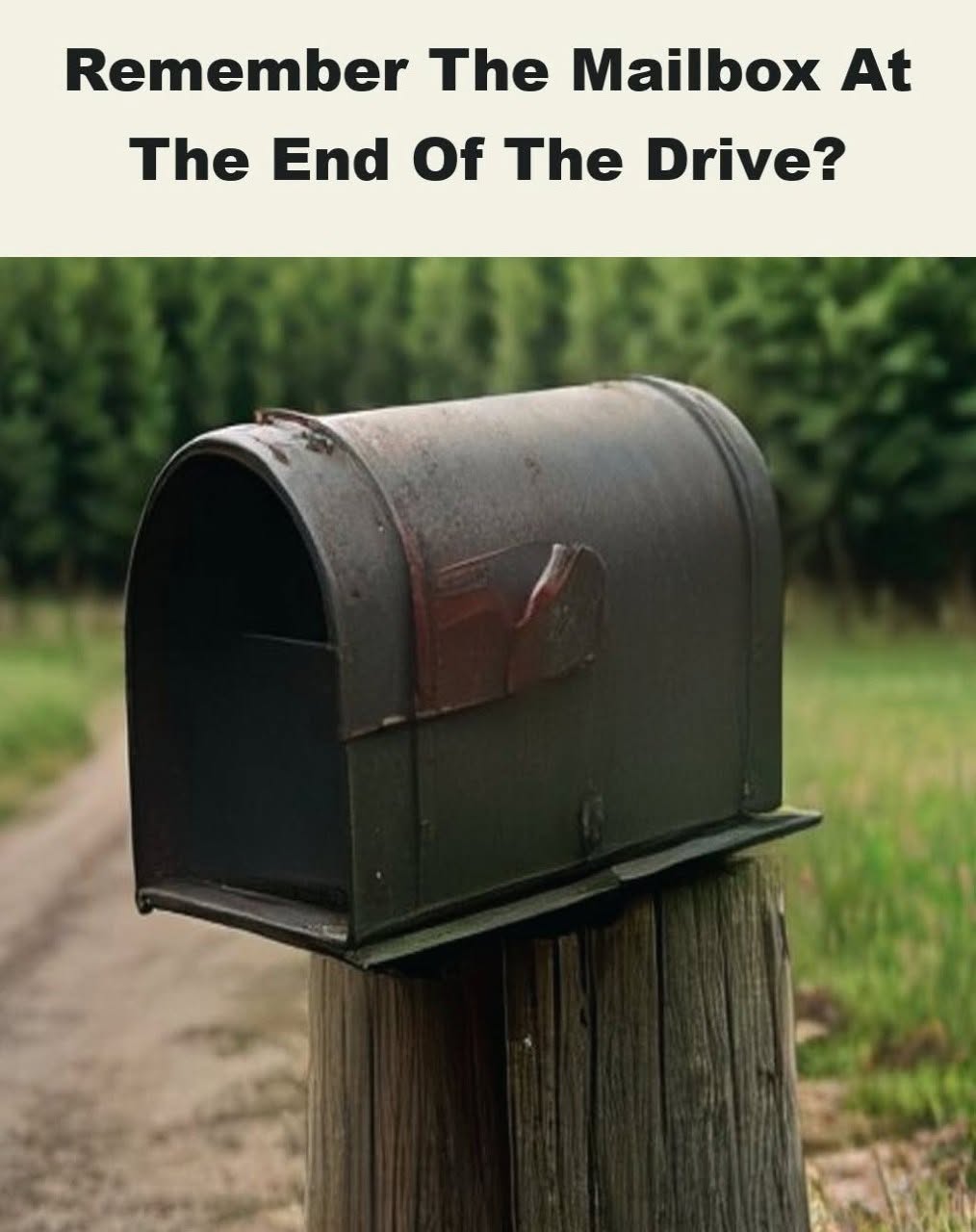
At the end of a long gravel drive, past the ditch and the row of daylilies somebody’s grandmother planted, stood the mailbox. Not a matching suburban unit on a tidy brick column, but a dented tin box on a leaning wooden post, its little red flag bent from years of being flipped up and down. For a lot of us, that mailbox was the first landmark you learned to recognize from the road.
The Numbers Nobody Painted Straight
The house numbers were almost always hand-painted, and almost never quite level. Somebody grabbed a small brush and a can of leftover paint and did their best, and that was that for the next thirty years. Sun faded them, rain streaked them, and a stray swipe from the snowplow took a corner off now and then. You didn’t need them to be perfect. Everyone who mattered already knew which drive was yours, and the mail carrier could have found it blindfolded.
Why Rural Mailboxes Looked the Way They Did
There was a reason those boxes all sat out by the road on a post instead of up by the door. Rural Free Delivery, the service that finally brought daily mail to the countryside, was built around a carrier driving a route and reaching each box without leaving the vehicle. That is why the box sat at a car window’s height, why the flag existed so the carrier knew to stop for outgoing letters, and why the whole thing lived at the far end of the drive rather than the porch. The design was practical, not decorative, and it quietly shaped what the front of every country property looked like for generations.
More Than a Place for Letters
That mailbox did double duty. It held the seed catalogs and the church newsletter, but it was also a meeting point. Kids raced the school bus to check it. Neighbors left notes tucked under the flag. In summer it got hot enough to warp a candy bar somebody mailed as a joke. Checking the mail meant a walk down the drive and, more often than not, a wave to whoever was passing.
Most of those hand-lettered boxes are gone now, replaced by reflective vinyl numbers and molded plastic. But if you grew up with one, you can probably still picture yours exactly — the dents, the crooked numbers, the sound the little door made. What did the mailbox at the end of your drive look like?