

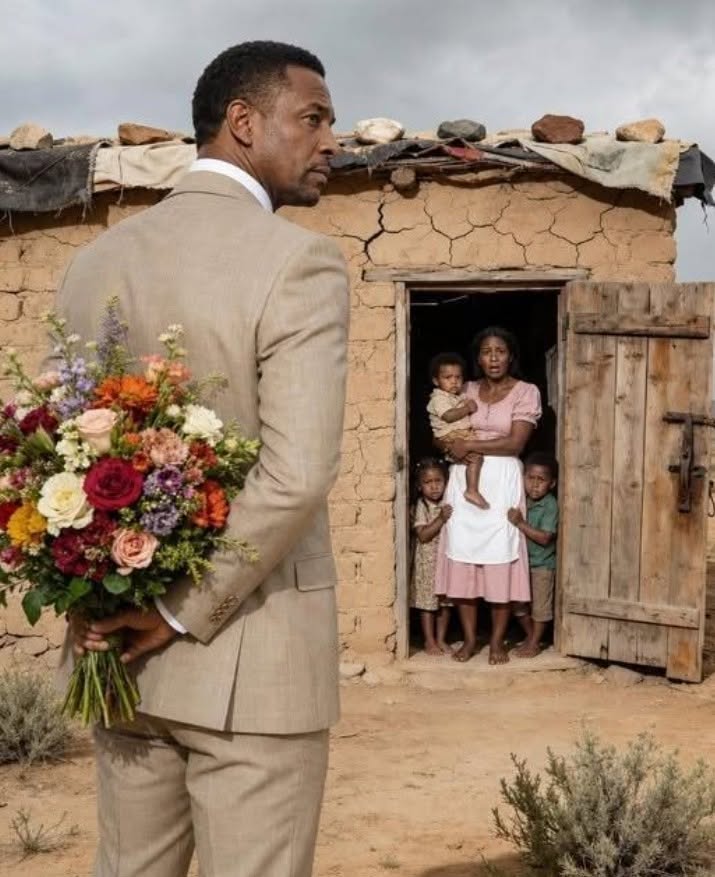
In front of him stood a modest, weathered cabin that looked as though it had been swallowed by the surrounding wilderness decades ago. A rusted tin roof caught the dim afternoon sunlight, and the wooden porch boards sagged heavily under the weight of time and neglect. There were no manicured lawns, no security gates, and no towering glass walls to separate the inhabitants from the harsh realities of the rural Kentucky landscape. Yet, what truly made Daniel freeze wasn’t the dilapidated state of the dwelling itself, but the small, handmade wooden sign nailed beside the splintered front door. The sign read simply: WHITMORE COMMUNITY PANTRY & REPAIR.
He killed the engine. The sudden silence of the countryside felt heavier than any corporate boardroom he had ever commanded. Stepping out of the rented truck, his custom leather shoes crunched softly against the gravel driveway. Every instinct he had cultivated over a lifetime of ruthless business acquisition told him to turn around, get back behind the wheel, and retreat to the sterile safety of Manhattan. But his feet remained rooted to the ground. As he walked slowly toward the porch, the heavy scent of pine needles and damp earth filled his senses, mixing with the distant sound of children laughing somewhere down the winding lane.
The front door creaked open before he even had a chance to raise his hand to knock.
Emily stepped out into the doorway, wiping her hands on a worn denim apron. She didn’t look like the broken, weeping woman he had cruelly cast out of his life nine years ago. Her hair was silver-streaked now, gathered loosely behind her head with a simple wooden clip, but her eyes held a steady, unshakeable clarity that instantly made Daniel feel entirely transparent. She didn’t gasp. She didn’t step back in shock or reach for a weapon. She simply looked at him with the quiet patience of someone who had long since made peace with the ghosts of her past.
“You found the address, Daniel,” she said, her voice smooth and devoid of the venom or anger he had spent hours bracing himself to receive.
“Emily,” he choked out, the syllable feeling clumsy and foreign on his tongue. He swallowed hard, his gaze darting across the cluttered porch, taking in the stacked crates of canned goods, a box of donated tools, and a bicycle with a flat tire resting against the wall. “What… what is all of this? How are you living like this? When I read your letter, I expected… I didn’t expect a shelter.”
“It’s not a shelter,” Emily replied softly, leaning against the doorframe. “It’s a hub. When you threw me out with nothing but a suitcase and a signed waiver of alimony, you thought you were stripping me of everything. You thought money was the only currency that mattered in this world. And for a little while, out here in the quiet, I thought you were right. I struggled. I worked three jobs just to keep this old structure from collapsing on my head.”
Daniel took a step closer, his hands trembling slightly at his sides. “Then why write to me? Why reach out now, after all this time, if you built all of this on your own?”
Emily stepped out onto the sagging porch, the wooden boards groaning beneath her boots, and looked past him toward the empty gravel road where his rental truck was idling. “Because building something real requires facing what you broke, Daniel. When I was going through my old paperwork last month, I found the remaining balance statements from the corporate severance accounts you tried to conceal during our divorce settlement. Legally, those funds were tied up in a deferred liability pool that your accountants overlooked. It amounts to a little over four hundred thousand dollars.”
Daniel’s breath caught in his throat. Four hundred thousand dollars was pocket change to Whitmore Industries, but out here, in a town where people traded labor for vegetables and fixed their own roofs, it was a fortune.
“I didn’t come here to reclaim it,” Daniel stammered, his polished corporate persona completely disintegrating under the weight of her steady gaze. “I came here because… because I wanted to see if you were safe. Because every year I spent building towers in New York, I realized that I traded my humanity for a balance sheet.”
Emily studied him for a long, agonizing moment. The silence between them wasn’t hostile; it was a profound, echoing space where decades of accumulated regret finally caught up with him. She didn’t invite him inside, nor did she slam the door in his face. Instead, she reached into the pocket of her apron and pulled out a small, worn envelope, sliding it across the weathered porch table toward him.
“You’re welcome to stay for dinner, Daniel,” Emily said, a faint, forgiving smile touching the corners of her lips. “We’re having vegetable stew. But if you want to understand what true wealth actually looks like, you’ll have to help me fix that flat tire on the children’s bicycle first.”