

A document is signed.
The world does not announce every rescue.
Sometimes it simply makes room.
The first request came three days later.
A woman named Elena. Forty-one. Two children. Evicted after missing rent during a medical leave from her job at a dental office in Queens. Temporary shelter ending in forty-eight hours.
The nonprofit coordinator spoke quickly, trying to sound professional, but I heard the exhaustion beneath her voice. People who handle emergencies every day develop a tone that is half efficiency, half prayer.
“We don’t need much,” she said. “First month, security deposit, basic groceries. She already has a job to return to if she can stay in the area.”
I approved it.
Just like that.
A hotel room for two nights while the apartment paperwork cleared. A deposit. A grocery card. A small utility payment.
When I hung up, I sat alone in the study.
Somewhere across the city, a mother would be able to tell her children they were going somewhere with a locked door and clean sheets.
No ballroom would know.
No photographer would come.
No one would print my name in bold letters.
I felt more useful in that quiet moment than I had felt in years of standing beside Thomas beneath chandeliers.
That night, Thomas asked about my day.
I told him.
He listened without interrupting.
When I finished, he said, “That sounds like exactly what you were meant to do.”
I looked at him carefully, searching for ownership in the compliment.
There was none.
“Thank you,” I said.
A week later, he came home early and placed an envelope on the kitchen table.
“What is this?” I asked.
“A personal contribution.”
I did not touch it.
“To the fund?”
“Yes.”
“Publicly?”
“No.”
I waited.
He almost smiled, but not quite.
“No announcement. No donor table. No plaque. No clever remarks at dinner. Just a check.”
I opened the envelope.
The amount was substantial.
“Thomas.”
“I don’t expect this to fix anything,” he said. “I’m not buying absolution.”
“Then what are you doing?”
“Learning,” he said.
It was not a grand answer.
It was a good one.
I accepted the check.
Over the next months, the fund grew carefully. I named it The Collins Room, though there was no website announcing it, no launch party, no ribbon-cutting. Edward cried when I told him the name, though he turned toward the window quickly and pretended to study the weather.
We helped Elena first.
Then a retired teacher whose pension paperwork had been delayed.
Then a grocery cashier leaving a marriage she no longer had the strength to describe twice.
Then a grandmother caring for two grandchildren after her daughter entered treatment.
The cases were not dramatic in the way people sell drama. They were ordinary emergencies, which made them more devastating. A late paycheck. A medical bill. A landlord who would not wait. A winter coat bought instead of an electric bill. One bad month standing between a family and the street.
The fund did not save everyone.
Nothing does.
But it saved some.
And “some” is not a small word when you know their names.
Thomas changed too, not quickly, not perfectly, but in ways I could measure.
At the next Bennett Foundation luncheon, someone made a joke about how I was “the million-dollar dinner date.”
Before I could respond, Thomas said, “Laura is the reason half of this organization works. I’d appreciate it if we stopped treating her like a punchline.”
The table went quiet.
The man who had made the joke flushed.
I looked at Thomas.
He did not look at me for approval. He simply returned to his salad, as though respect did not require a standing ovation.
That mattered.
Marriage did not become magically young again. We did not turn into people who held hands in grocery stores and finished each other’s sentences. Life is rarely that neat.
But something essential had been corrected.
Not repaired completely.
Corrected.
There is a difference.
One evening in late spring, almost seven months after the gala, I received a letter from Elena.
She wrote it on lined paper, the kind children use for school assignments. She said her boys were sleeping in the same room but in separate beds for the first time in months. She said she had gone back to work. She said the apartment had a little window over the sink and that every morning, while making coffee, she watched pigeons fight on the fire escape and felt grateful for ordinary problems.
At the bottom she wrote:
You gave us time.
I sat at the kitchen table with that letter in my hands and felt Margaret’s echo move through the room.
Thomas came in quietly.
“Good news?” he asked.
I handed him the letter.
He read it slowly.
When he finished, he set it down with care.
“I understand now,” he said.
“What?”
“Why one safe month matters.”
I looked toward the window. Outside, the city was turning blue with evening, that brief hour when even hard streets look gentle.
“It mattered to Margaret,” I said.
“It mattered to you too.”
I thought about that.
Maybe it had.
Maybe helping Margaret all those years ago had been one of the last times I acted from a self that was fully mine before marriage, money, status, and quiet compromises blurred the edges.
Maybe Edward had not only honored his mother.
Maybe he had returned me to myself.
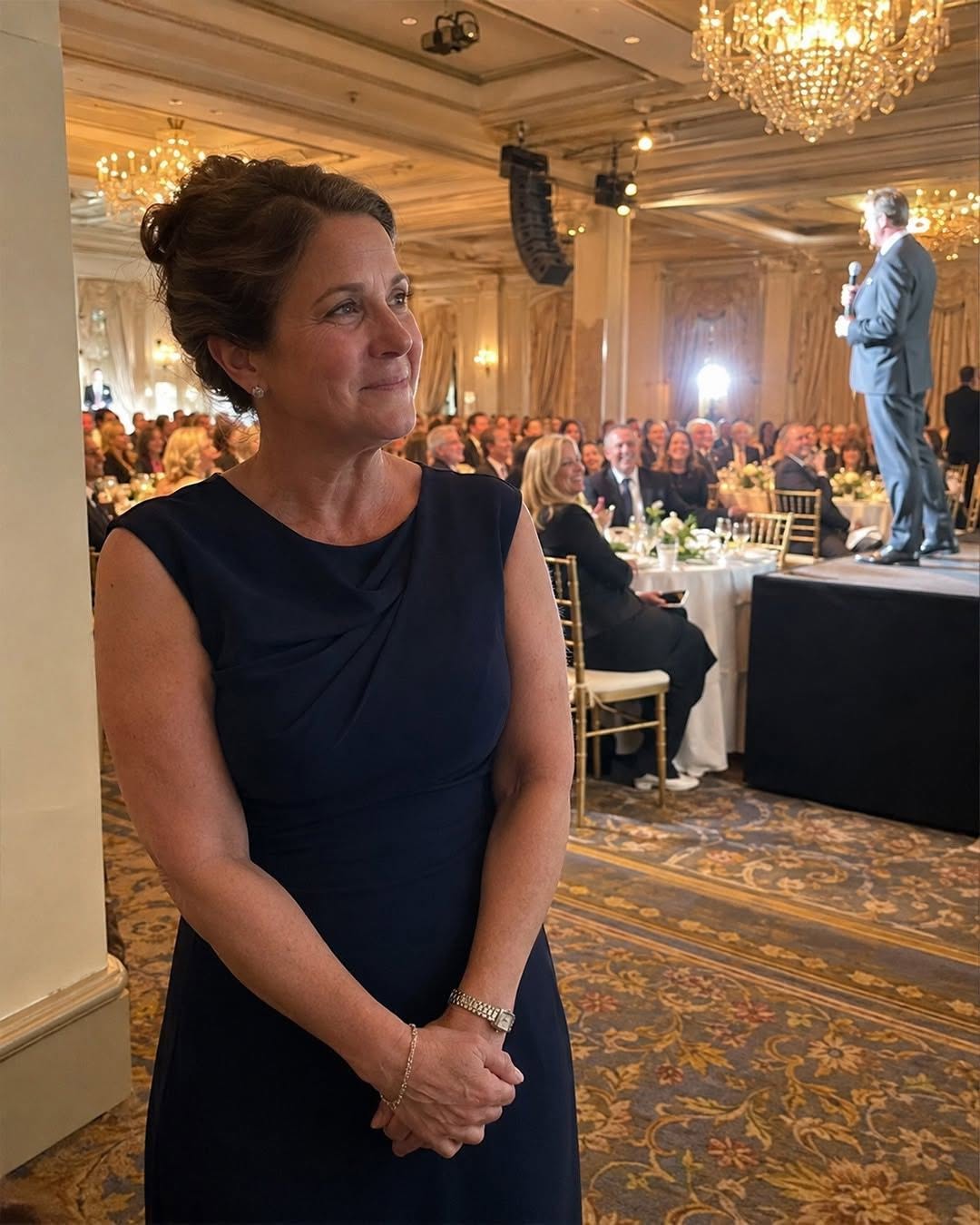
The following autumn, the Bennett Foundation held another gala at the Meridian.
Thomas asked if I wanted to skip it.
I said no.
I wore the same navy dress.
Not because I had to.
Because I wanted to remember accurately.
The ballroom looked almost identical. Same chandeliers. Same linen. Same rich perfume of flowers and polished wood. Some of the same guests, too, though several greeted me differently now.
People are funny that way.
They often mistake new information for new worth.
Before dinner, Thomas stood beside me near the entrance, greeting donors. When the photographer lifted his camera, Thomas moved slightly back and placed a hand at my shoulder, guiding me forward instead of pulling me beside him.
“Laura should be in the center,” he said.
The photographer adjusted.
A small thing.
But I have learned to respect small things.
Later, Thomas took the stage.
I felt the room tense in that subtle way rooms do when memory is present.
He began with the usual welcome, then paused.
“Last year,” he said, “I made a joke in this ballroom at my wife’s expense.”
The room went still.
I looked up at him.
“It was a poor joke,” he continued. “Worse than that, it was an unkind one. Many of you laughed because I gave you permission to laugh. That responsibility is mine.”
No one moved.
Thomas looked directly at me.
“Laura spent years making my work possible while I accepted applause for what she helped build. Tonight, before we speak about giving, I want to publicly thank the person who taught me that quiet work is not lesser work. It is often the work that holds everything else together.”
My throat tightened.
He did not overdo it.
He did not turn repentance into theater.
He simply stepped away from the microphone and began clapping.
The applause that followed was different from the applause of the year before.
Less careless.
More awake.
Edward stood at the back of the room, in nearly the same place he had stood that night. He met my eyes and nodded once.
I nodded back.
There are moments when justice does not arrive as punishment.
Sometimes it arrives as recognition.
After the gala, I walked outside alone for a minute. The air was cool again, just like it had been that first night. Cabs moved along the curb. Somewhere down the block, a couple argued softly, then laughed. Life went on in all its ordinary, imperfect ways.
I thought of Margaret.
I thought of Elena.
I thought of the woman I had been one year earlier, standing under golden light while people laughed because my husband had taught them it was safe to do so.
If I could speak to that woman now, I would not tell her to shout. I would not tell her to leave the room or throw wine or make a scene worthy of gossip.
I would tell her this:
Stay standing.
Let them hear themselves.
Sometimes silence is not surrender.
Sometimes it is the last quiet moment before the room learns your name.
That night, when Thomas and I got home, I placed Margaret’s letter back in my desk beside the trust journal.
The journal now held seventeen names.
Seventeen safe months.
Seventeen doors.
I ran my fingers over the cover and smiled.
Twenty-five years ago, I had opened one room for one woman.
For a long time, I thought that was all it had been.
I know better now.
A kind act does not always return as gratitude. Sometimes it returns as responsibility. Sometimes as courage. Sometimes as a stranger’s voice from the back of a ballroom, placing a value on a woman everyone else had been taught to underestimate.
Thomas once auctioned me for ten dollars in front of two hundred guests.
He thought he was making a joke.
He did not know that someone in the room carried the memory of a rainy afternoon, a spare bedroom, and a woman named Margaret who had never forgotten what dignity felt like.
He did not know that one quiet kindness had been gathering interest for twenty-five years.
And by the time he understood, the laughter had already died.
What remained was worth far more than a million dollars.